 Skip to content




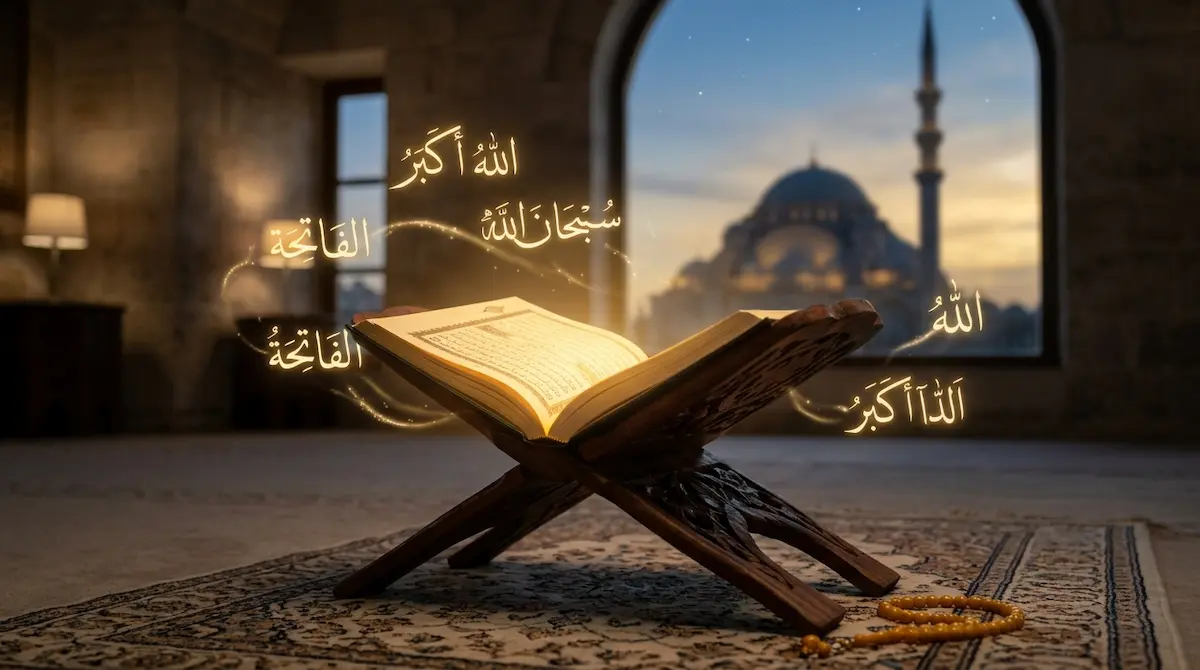
Every Muslim recites Surah Al-Fatiha at least seventeen times every single day. Yet very few people pause to truly understand what they are saying, why they are saying it, and what profound gift Allah has placed in these seven short verses.
Understanding what is Surah Al-Fatiha meaning and benefits is not just an academic exercise. It is a transformative experience that changes how you pray, how you think, and how you connect with Allah in every moment of your life.
This article covers everything you need to know about Surah Al-Fatiha. You will learn its meaning verse by verse, its spiritual and practical benefits, its virtues as confirmed by authentic Hadith, the lessons it teaches, and how you can use it to genuinely transform your daily life.
Whether you are a complete beginner or someone who has been praying for decades, what follows will deepen your relationship with the most recited words in human history.
What Is Surah Al-Fatiha?
Surah Al-Fatiha is the first chapter of the Quran and one of the most important passages in all of Islamic worship. Its name means The Opening, reflecting its position at the beginning of the Quran and its role as the opening of every unit of Salah.
The Surah consists of seven verses and serves as a complete summary of the Quran’s core message, covering praise of Allah, recognition of His mercy and sovereignty, dedication to worship, and the sincere request for guidance to the straight path.
It is obligatory in every unit of Salah, making it the most recited chapter in the Quran. Its benefits include spiritual healing, strengthened faith, direct conversation with Allah, and a profound sense of guidance and purpose in daily life.
Whether you are exploring Quran learning for your child for the first time or you are an adult, You can get Online Quran Classes free trial USA.
Meaning of Al-Fatiha
The word Al-Fatiha comes from the Arabic root f-t-h, which means to open, to unlock, or to begin. It is called The Opening because it opens the Quran, opens every unit of Salah, and in a profound spiritual sense, opens the heart of the believer to direct communication with Allah.
Why It Is Called The Opening
The name reflects multiple dimensions of meaning. It opens the Book of Allah. It opens the door of prayer. It opens the conversation between the servant and the Lord. It opens the believer’s understanding of their purpose in this world and their hope for the next.
Position in the Quran
Surah Al-Fatiha occupies the very first position in the Quran, even though some scholars note that earlier revelations came before it chronologically. Its placement at the beginning is deliberate and divinely guided, establishing the framework through which everything else in the Quran is understood.
Overview of Its Message
In just seven verses, Surah Al-Fatiha covers the foundational pillars of Islamic belief and practice. It establishes that all praise belongs to Allah, that He is the Lord of all worlds, that He is infinitely merciful, that He alone will judge on the Day of Judgment, that He alone deserves worship and from Him alone help is sought, and that the highest aspiration of every believer is to be guided to the straight path followed by those whom Allah has blessed.
Why Is Surah Al-Fatiha Important?
The importance of Surah Al-Fatiha cannot be overstated. It sits at the intersection of theology, worship, supplication, and daily practice in a way that no other passage in any religious tradition quite matches.
Foundation of Salah
The Prophet Muhammad ﷺ said, as reported in Sahih al-Bukhari, that there is no Salah for the one who does not recite the opening chapter of the Book. This establishes Surah Al-Fatiha not as a recommended addition to prayer but as an absolute requirement without which the prayer itself is invalid.
Every Muslim who prays five times a day recites it a minimum of seventeen times. Those who pray additional voluntary prayers recite it even more. Over a lifetime of worship, this single Surah is recited millions of times by the sincere believer.
Summary of the Quran
Classical Islamic scholars have described Surah Al-Fatiha as Umm Al-Kitab, meaning the Mother of the Book, because it contains within its seven verses a summary of everything the Quran teaches. Tawheed, the oneness of Allah, is in its opening. Worship and dependence on Allah are in its middle. Supplication for guidance is in its conclusion. The entire spiritual journey of a Muslim from recognition of Allah to seeking His guidance is compressed into this one magnificent chapter.
Direct Conversation with Allah
One of the most extraordinary and often overlooked dimensions of Surah Al-Fatiha is that it is a two-way conversation between the servant and Allah. In Sahih Muslim, the Prophet ﷺ reported that Allah said He has divided the prayer between Himself and His servant into two halves, and His servant will have what he asks for.
When you say Alhamdulillahi Rabbil Alameen, Allah responds that His servant has praised Him. When you say Ar-Rahman ir-Raheem, Allah responds that His servant has glorified Him. When you say Maliki Yawm id-Deen, Allah responds that His servant has honored Him. When you say Iyyaka Na’budu wa Iyyaka Nasta’een, Allah responds that this is between Him and His servant and His servant will have what he asks. When you ask for guidance, Allah responds that this is for His servant and His servant will have what he asks.
This means that every time you recite Surah Al-Fatiha in prayer, you are in a live, real-time conversation with your Creator. Understanding this transforms the experience of Salah completely.
Most Recited Surah in Human History
No passage in any human language has been recited as many times as Surah Al-Fatiha. With over a billion Muslims praying five times daily, the total number of recitations of this Surah across humanity in any given day reaches into the tens of billions. It is the most spoken, most repeated, and most memorized text in human history.
Surah Al-Fatiha Meaning Verse by Verse
Let us now walk through each of the seven verses of Surah Al-Fatiha with their translation, explanation, and practical application.
Bismillah ir-Rahman ir-Raheem
Translation: In the name of Allah, the Most Gracious, the Most Merciful.
Explanation: This verse, known as the Basmala, begins not with a human declaration but with an act of alignment. By saying these words, the believer consciously places everything they are about to do under the name and authority of Allah. The two attributes of Allah mentioned here, Rahman and Raheem, both derive from the Arabic root for mercy, but they carry distinct meanings. Rahman refers to Allah’s all-encompassing mercy that extends to every creation in this world, believer and disbeliever alike. Raheem refers to a special, intimate mercy that Allah reserves for the believers in the hereafter.
Practical Lesson: Beginning every action with Bismillah is a Sunnah that transforms ordinary activities into acts of worship and reminds the believer constantly of their dependence on Allah’s mercy.
Alhamdu Lillahi Rabbil Alameen
Translation: All praise and thanks are due to Allah, the Lord of all the worlds.
Explanation: This is the opening declaration of the prayer and one of the most comprehensive statements in the Arabic language. The word Alhamdulillah contains within it both praise and gratitude, acknowledging not only that Allah is praiseworthy but that the believer actively and willingly praises Him. Rabbil Alameen establishes that Allah is not merely the God of Muslims or of humanity but the Lord and Sustainer of every world, every dimension of existence, every creature seen and unseen.
Practical Lesson: Beginning worship with gratitude and praise before making any request models the ideal relationship between the believer and Allah. It reminds us that our first response to existence itself should be thankfulness.
Ar-Rahman ir-Raheem
Translation: The Most Gracious, the Most Merciful.
Explanation: After establishing that Allah is the Lord of all worlds, the Surah immediately emphasizes His mercy. This repetition of the attributes of Rahman and Raheem from the Basmala is deliberate and significant. It ensures that the believer’s understanding of Allah as the all-powerful Sustainer is immediately balanced with the recognition that this all-powerful Being is defined above all by His mercy and compassion.
Practical Lesson: Understanding that the all-powerful Creator is simultaneously the Most Merciful removes fear-based worship and replaces it with love-based worship grounded in genuine relationship.
Maliki Yawm id-Deen
Translation: Master of the Day of Judgment.
Explanation: This verse introduces the concept of ultimate accountability. After establishing Allah’s mercy and sustaining power, the Surah reminds the believer that there is a Day of Judgment on which all actions will be accounted for and perfect justice will be established. The word Malik means Master or King, conveying absolute sovereignty. Yawm id-Deen, the Day of Recompense, is when every soul receives exactly what it earned.
Practical Lesson: Regular reflection on accountability motivates ethical behavior, discourages negligence in worship, and provides comfort in the face of worldly injustice by reminding believers that justice is ultimately guaranteed.
Iyyaka Na’budu Wa Iyyaka Nasta’een
Translation: You alone we worship, and You alone we ask for help.
Explanation: This is the central verse of Surah Al-Fatiha and one of the most powerful declarations in all of Islamic theology. The Arabic construction places the object before the verb, which in Arabic grammar conveys exclusivity. The meaning is not simply that we worship Allah and ask Him for help, but that we worship only Allah and ask help from only Allah. This verse is the definitive statement of Tawheed in practice.
Practical Lesson: This verse is a daily renewal of the covenant between the believer and Allah. It is a reminder that seeking help from other than Allah for things only Allah can provide is a form of spiritual displacement that weakens the believer’s connection to their Creator.
Ihdinas Siratal Mustaqeem
Translation: Guide us to the straight path.
Explanation: After declaring exclusive worship and dependence, the believer makes their most important request. Guidance to the straight path is not merely a request for directions. It is a supplication for the right understanding of truth, the right conduct in life, the right priorities in every situation, and the right destination in the hereafter. The word Ihdina is plural, reflecting that this supplication is made not just for oneself but for the entire community of believers.
Practical Lesson: Making this supplication at least seventeen times daily is a constant reminder that guidance is not a one-time event but an ongoing gift from Allah that must be continually sought and renewed.
Siratal Ladhina An’amta Alayhim
Translation: The path of those upon whom You have bestowed favor, not of those who have earned anger, nor of those who have gone astray.
Explanation: The final verse specifies the straight path by reference to those who have walked it successfully. It is the path of the Prophets, the truthful, the martyrs, and the righteous, all those whom Allah has blessed with His guidance and favor. The verse also defines what the straight path is not, making clear that the believer seeks to avoid both deliberate rejection of truth and aimless wandering without guidance.
Practical Lesson: The conclusion of the Surah reminds believers that they are part of a community of guidance that stretches across all of human history and that their goal is to join the company of the blessed.
Are you ready to understand the Quran the way it was meant to be understood? Our Quran Academy offers structured Online Quran Classes, Quran Translation Classes, and Quran Tafseer Classes with qualified scholars who make the Quran come alive for students of every level. Begin your journey today.
Benefits of Surah Al-Fatiha
The benefits of Surah Al-Fatiha touch every dimension of human experience, from the spiritual to the psychological to the practical.
Spiritual Benefits
Reciting Surah Al-Fatiha with understanding creates a moment of genuine connection with Allah in every prayer. It renews the believer’s covenant of worship, reaffirms their Tawheed, and opens the door to direct divine response as established in the Hadith of Sahih Muslim discussed above.
Emotional Benefits
Understanding the mercy of Allah described in Al-Fatiha provides profound emotional comfort. Knowing that the Master of the Day of Judgment is simultaneously the Most Merciful removes anxiety about one’s shortcomings and replaces it with hope grounded in genuine trust in Allah’s compassion.
Guidance from Allah
The central supplication of Surah Al-Fatiha is a request for guidance. Muslims who recite this with genuine understanding and sincerity are actively and repeatedly asking Allah to direct their decisions, their priorities, and their path through life. This consistent seeking of guidance is itself a form of tawakkul, trust in Allah, that shapes the believer’s entire approach to life’s challenges.
Increased Faith
Each recitation of Surah Al-Fatiha is a renewal of faith. The declarations of praise, the acknowledgment of Allah’s sovereignty, the affirmation of exclusive worship, and the supplication for guidance all work together to continuously reinforce the foundational beliefs of Islam in the heart of the believer.
Better Focus in Prayer
When a person understands what they are saying in Surah Al-Fatiha, their experience of Salah changes completely. Rather than a routine recitation, each word becomes a conscious act of worship, praise, or supplication. This understanding eliminates distraction and creates the quality of presence in prayer that scholars call khushu.
Source of Healing (Ruqyah)
Abu Sa’id al-Khudri (RA) narrated in Sahih al-Bukhari that a group of Companions used Surah Al-Fatiha as a form of Ruqyah, reciting it over a man who had been stung by a scorpion, and he recovered. When they reported this to the Prophet ﷺ, he affirmed their action and asked how they knew it was a Ruqyah. This authentic narration establishes Surah Al-Fatiha as a legitimate and powerful source of spiritual healing.
Strengthening Tawheed
Every verse of Surah Al-Fatiha reinforces the absolute oneness of Allah in a different dimension. His lordship over all worlds, His mercy, His sovereignty on the Day of Judgment, His exclusive right to worship, His alone capacity to provide help, and His role as the ultimate guide all combine to paint a complete picture of Tawheed that is renewed in the believer’s heart with every recitation.
Gratitude and Humility
Beginning prayer with Alhamdulillah, all praise is due to Allah, establishes gratitude as the foundation of the believer’s relationship with their Creator. This orientation toward gratitude, practiced seventeen or more times daily, gradually reshapes the believer’s entire worldview into one of abundance and thankfulness rather than complaint and entitlement.
Virtues of Surah Al-Fatiha
Beyond its meaning and benefits, Surah Al-Fatiha holds a special status in Islamic scholarship that is confirmed by multiple authentic narrations.
Greatest Surah in the Quran
Abu Hurairah (RA) narrated that the Prophet ﷺ said to him, as reported in Sahih al-Bukhari, that he would teach him a Surah that is the greatest Surah in the Quran before leaving the mosque. He then recited Alhamdulillahi Rabbil Alameen and said it is the Seven Oft-Repeated Verses and the Great Quran that has been given to him. This Hadith explicitly identifies Surah Al-Fatiha as the greatest chapter in the entire Quran.
Seven Oft-Repeated Verses
Allah describes Surah Al-Fatiha in the Quran itself in Surah Al-Hijr, verse 87, as the Seven Oft-Repeated Verses. This divine description within the Quran is one of the clearest indicators of the Surah’s unique status and its role as the recurring heart of every prayer.
Essential Part of Salah
As established by Hadith in Sahih al-Bukhari, no prayer is valid without Surah Al-Fatiha. This ruling makes it the most practically essential passage in Islamic worship, more fundamental to daily religious practice than any other portion of the Quran.
Allah Responds During Its Recitation
The Hadith Qudsi reported in Sahih Muslim, in which Allah Himself describes responding to the believer verse by verse during the recitation of Surah Al-Fatiha, gives this Surah a status unlike any other. It is a passage during whose recitation Allah is actively listening and actively responding in real time.
Lessons We Learn From Surah Al-Fatiha
The lessons embedded in these seven verses encompass the entire spiritual and ethical framework of Islamic life.
Tawheed is established in every verse through the attribution of all perfection, power, and authority exclusively to Allah.
Worship is defined in verse five as something owed exclusively to Allah and not to be directed toward any other being or force.
Dependence on Allah is affirmed in the same verse through the acknowledgment that help comes only from Allah, cultivating a spirit of reliance that frees the believer from unhealthy dependence on other humans or material circumstances.
Seeking Guidance is modeled as a continuous practice rather than a one-time event, establishing that growth in faith requires ongoing asking and ongoing receiving of divine direction.
Accountability is embedded in verse four, reminding the believer that every action has consequences and that ultimate justice will be served on the Day of Judgment.
Mercy is woven through the Surah from its first verse to its last, establishing that Allah’s defining characteristic in His relationship with creation is compassion rather than harshness.
Gratitude opens the Surah and sets the tone for the entire spiritual framework it presents.
Patience and Trust are implied in the supplication for guidance, which acknowledges that the believer does not always know the best path and must trust in Allah’s direction rather than purely their own judgment.
How Surah Al-Fatiha Can Transform Your Daily Life
The impact of truly understanding Surah Al-Fatiha extends far beyond the moments of formal prayer.
When you genuinely internalize that Allah is Ar-Rahman ir-Raheem, the Most Merciful, your approach to personal failure changes. Instead of shame and despair, you turn to a Creator who is defined by His desire to forgive and support.
When you genuinely internalize Maliki Yawm id-Deen, you develop a long-term perspective that prevents the short-sighted decisions that cause so much human suffering. The certainty of accountability creates ethical clarity even in situations where worldly consequences seem unlikely.
When you genuinely internalize Iyyaka Na’budu wa Iyyaka Nasta’een, you develop a relationship with Allah that is the foundation of genuine psychological resilience. You stop seeking validation from people and circumstances that are not equipped to provide it and instead orient your need for meaning and support toward the only source that can fully meet it.
When you genuinely internalize Ihdinas Siratal Mustaqeem as a daily supplication, you develop the humility to acknowledge that your own judgment is limited and the wisdom to consistently seek divine guidance in your decisions, your relationships, and your priorities.
This is why classical scholars described Surah Al-Fatiha not merely as the opening of the Quran but as the key that opens the heart of the believer to everything the Quran has to offer.
Deepen your understanding of the Quran and transform your relationship with Allah. Our Quran Academy’s Tafseer Program is designed to help you understand the Quran verse by verse with qualified scholars who bring its meaning to life. Join thousands of students worldwide who are studying the Quran with purpose and clarity.
Common Mistakes When Reciting Surah Al-Fatiha
Despite reciting Surah Al-Fatiha multiple times every day, many Muslims make mistakes that reduce its impact and in some cases affect its validity.
Reciting without understanding is the most widespread issue. When words are recited as sounds rather than as meaningful statements, the profound spiritual experience of the Surah is replaced by mechanical repetition. Making even a basic effort to understand the meaning of each verse transforms the quality of prayer immediately.
Poor pronunciation is a concern that affects the meaning of specific words. Arabic is a precise language where slight changes in pronunciation can alter meaning significantly. For example, mispronouncing Sirat as Zirat or altering the voweling of specific words can change what is being said. Learning basic Tajweed rules for Surah Al-Fatiha is an obligation for every Muslim who prays.
Lack of concentration during recitation means that the believer is physically present in prayer but mentally absent. The Hadith establishing that Allah responds to each verse during the recitation of Al-Fatiha makes clear that the prayer is intended to be an engaged conversation, not a passive ritual.
Rushing through Salah leads to slurring of words, incomplete pronunciation, and the loss of the reflective pauses that allow the meaning of each verse to settle in the heart. The Prophet ﷺ consistently demonstrated a measured, deliberate pace in prayer that allowed for genuine presence and engagement.
How to Memorize and Understand Surah Al-Fatiha
For anyone who has not yet memorized Surah Al-Fatiha or who wants to deepen their understanding of memorization what they already know, the following approach is highly effective.
Word-by-word study is the foundation of genuine understanding. Rather than learning the Surah as a block of sound, break it into individual words, learn what each word means, and understand how the words connect to form each verse. Many resources are available that provide word-by-word translations of Surah Al-Fatiha.
Read a reliable translation of the entire Surah and reflect on it as a piece of writing. What is its overall message? What is the emotional journey it takes the reader through? How does each verse build on the one before it?
Study Tafsir to go beyond the surface meaning. Even a brief engagement with what scholars like Imam Ibn Kathir have said about each verse will dramatically enrich your understanding and make each recitation more meaningful.
Daily reflection means taking one verse per day and spending time thinking about its implications for your specific life circumstances. How does the verse about accountability speak to a decision you are currently facing? How does the verse about guidance relate to a challenge you are navigating?
Learning with a qualified teacher remains the most effective and most blessed method of Quran study. A teacher can correct pronunciation, answer questions, provide context, and guide your understanding in ways that self-study cannot replicate.
Surah Al-Fatiha at a Glance
| Feature | Details |
| Meaning | The Opening |
| Number of Verses | 7 verses |
| Place in Quran | First chapter, position one |
| Main Theme | Praise of Allah, worship, and supplication for guidance |
| Importance | Obligatory in every unit of Salah, greatest Surah in the Quran |
| Benefits | Spiritual healing, strengthened Tawheed, direct communication with Allah, guidance, increased faith |
| Other Names | Umm Al-Kitab (Mother of the Book), As-Sab’ul Mathani (Seven Oft-Repeated Verses), Ash-Shifa (The Cure), Al-Asas (The Foundation) |
| Revelation | Makkan Surah, revealed in the early years of prophethood |
| Status in Salah | No prayer is valid without it |
| Unique Feature | Allah responds to the believer verse by verse during its recitation |
Frequently Asked Questions
What is Surah Al-Fatiha?
Surah Al-Fatiha is the first chapter of the Quran, consisting of seven verses. Its name means The Opening. It is the most recited chapter in the Quran, being obligatory in every unit of Salah. It covers the foundational themes of Islamic belief including praise of Allah, recognition of His mercy, acknowledgment of His sovereignty, exclusive worship, and supplication for guidance to the straight path.
What are the benefits of Surah Al-Fatiha?
The benefits include spiritual healing through Ruqyah as confirmed in Sahih al-Bukhari, direct communication with Allah during prayer, strengthened Tawheed, emotional comfort through recognition of Allah’s mercy, increased focus and quality in Salah, guidance for daily decisions, and the ongoing renewal of faith through regular recitation with understanding.
Why is Surah Al-Fatiha important in Islam?
It is important for several reasons. It is obligatory in every unit of Salah without which the prayer is invalid. It is described by the Prophet ﷺ as the greatest Surah in the Quran. It contains a comprehensive summary of Islamic theology. And it is the only chapter in the Quran during whose recitation Allah Himself responds to the believer verse by verse, as established in Sahih Muslim.
Can Surah Al-Fatiha be used for healing?
Yes. The narration of Abu Sa’id al-Khudri (RA) in Sahih al-Bukhari establishes that the Companions used Surah Al-Fatiha as a form of Ruqyah, reciting it over a sick person who then recovered, with the Prophet ﷺ affirming this practice. Surah Al-Fatiha is therefore considered one of the most powerful and authentic sources of spiritual healing in Islamic tradition.
What lessons does Surah Al-Fatiha teach?
It teaches Tawheed, exclusive worship of Allah, dependence on Allah alone for help, the importance of seeking guidance, accountability on the Day of Judgment, gratitude as the foundation of faith, trust in Allah’s mercy, and the humility to acknowledge that the believer needs divine direction to navigate life successfully.
Why is Surah Al-Fatiha recited in every Salah?
Because the Prophet Muhammad ﷺ established it as a condition for the validity of prayer, saying in Sahih al-Bukhari that there is no prayer for one who does not recite the opening chapter of the Book. Its recitation in every unit of prayer ensures that the believer renews their covenant of worship, praise, and supplication for guidance at minimum seventeen times every day.
What does Umm Al-Kitab mean?
Umm Al-Kitab means the Mother of the Book. It is one of the names given to Surah Al-Fatiha and reflects the understanding that this chapter contains within its seven verses a summary of the entire message of the Quran. Just as a mother is the origin and foundation of the family, Al-Fatiha is the origin and foundation of the Quran’s teachings.
How can I understand Surah Al-Fatiha better?
Start by learning the meaning of each word individually. Then read a reliable translation of the full Surah. Next, engage with a reputable Tafseer such as Tafseer Ibn Kathir to understand the deeper explanation of each verse. Practice daily reflection by taking one verse per day and thinking about how it applies to your current life. Most effectively, study with a qualified teacher who can guide your understanding and answer your questions.
What is the main message of Surah Al-Fatiha?
The main message is that Allah alone deserves all praise and worship, that He is defined by His mercy and His ultimate sovereignty over all existence including the Day of Judgment, that the believer’s highest aspiration is to worship Him exclusively and depend on Him alone, and that the most important thing a human being can ask for in this life is guidance to the straight path of those whom Allah has blessed.
Is Surah Al-Fatiha the greatest Surah in the Quran?
Yes, according to an explicit statement of the Prophet Muhammad ﷺ in Sahih al-Bukhari, in which he told Abu Hurairah (RA) that he would teach him the greatest Surah in the Quran and then recited Alhamdulillahi Rabbil Alameen, identifying it as the Seven Oft-Repeated Verses and the Great Quran that has been given to him. No other Surah in the Quran has been given this explicit designation by the Prophet ﷺ.
Conclusion
Surah Al-Fatiha is simultaneously the simplest and the most profound text in Islamic practice. Seven verses. Less than thirty seconds to recite. And yet it contains within it the entire framework of the relationship between the human being and Allah.
Understanding what is Surah Al-Fatiha meaning and benefits is not a matter of advanced scholarship. It is a matter of basic Islamic literacy that every Muslim deserves access to. When you understand what you are saying in prayer, your Salah changes. When your Salah changes, your relationship with Allah changes. And when your relationship with Allah changes, every dimension of your life changes with it.
The straight path that Surah Al-Fatiha asks for begins with understanding the words through which you ask for it. Start that journey today.
Our Quran Academy offers Online Quran Classes, Quran Translation Courses, Tajweed Courses, and a comprehensive Tafseer Program designed to help students of every level understand the Quran with clarity, depth, and genuine connection. Join us and begin experiencing the Quran the way it was meant to be experienced.
Book your class today — and start hearing the words of Allah the way they were meant to be heard.
