 Skip to content




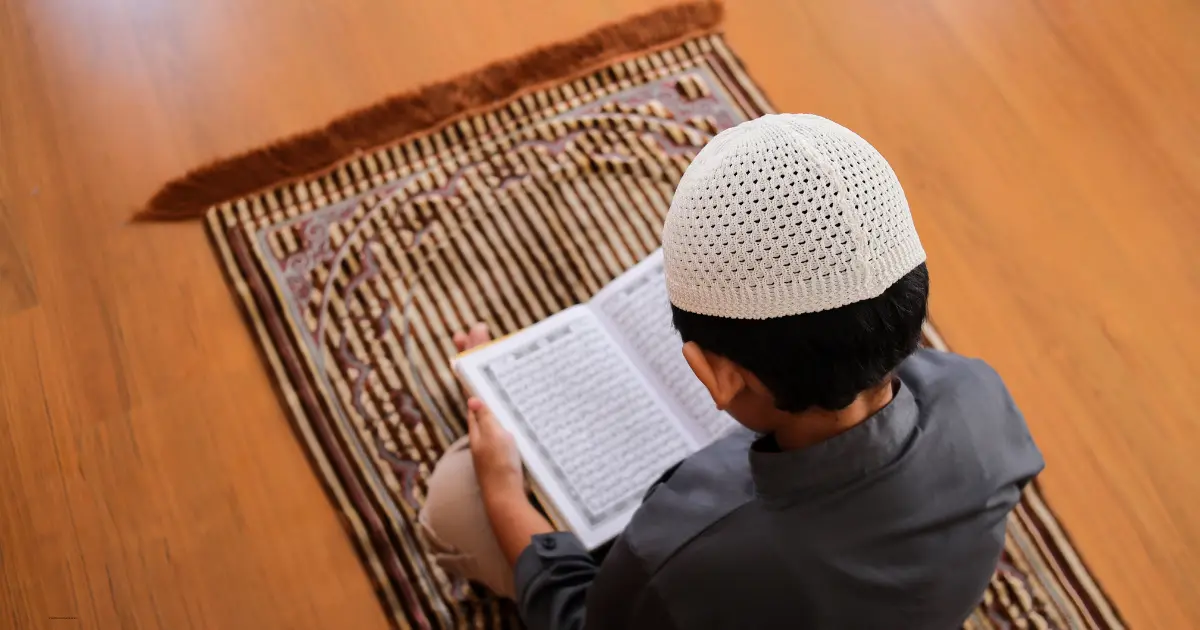
Noorani Qaida is a structured beginner’s booklet that teaches Arabic letters, their correct pronunciation (Makharij), vowel signs (Harakat), and the foundational rules of Tajweed, and today, you can learn Noorani Qaida online through live one-on-one classes with certified Quran tutors from the comfort of your home, at a schedule that fits your life, whether you’re a child starting for the first time or an adult who has been meaning to begin for years.
Where Every Quranic Journey Begins
There is a moment almost every Muslim has experienced at some point opening the Quran, looking at the page, and feeling like the letters are completely foreign. The sounds don’t come naturally. The symbols above and below the letters seem mysterious. You recognize it’s Arabic, but you don’t know where to begin.
This moment isn’t a sign of failure. It’s exactly the starting point that Noorani Qaida was designed for.
For generations, this slim booklet has served as the bridge between knowing nothing about Arabic and being able to recite the Quran with proper pronunciation. It was true before the internet existed, and it remains true today, except now learning it doesn’t require finding a local madrasah, adjusting to a fixed class schedule, or living within reach of a qualified teacher. You can learn Noorani Qaida online with the same quality of instruction, from anywhere in the world.
This guide covers everything you need to know: what the Qaida actually is, who compiled it, what it teaches lesson by lesson, and how to approach learning it online in a way that actually works.
What Is Noorani Qaida? The Foundation Explained
Noorani Qaida, also referred to as Qaida Noorania, Norani Qaida, or Al-Qaida An-Noraniah, is a foundational instructional booklet for learning to read Quranic Arabic. It was compiled by Sheikh Noor Muhammad Haqqani, a prominent Islamic scholar from the Indian subcontinent, and it takes its name directly from his. The word “Qaida” in Arabic means “base” or “foundation,” and that’s precisely what it provides.
It’s important to understand what Noorani Qaida is not. It isn’t a Tafseer. It isn’t a translation. It doesn’t teach you the meaning of the Quran or even require you to understand Arabic. Its sole, laser-focused purpose is to teach you how to read Arabic script correctly to produce the right sounds, recognize the letters in all their forms, understand the vowel markings, and apply the basic rules that govern how letters interact when read aloud.
This might sound simple, but it’s genuinely the hardest part for non-Arabic speakers. Arabic has sounds that have no equivalent in English, Urdu, French, Malay, or most other languages. Letters like ع (Ayn), ح (Ha), غ (Ghayn), ق (Qaf), and ص (Sad) require specific movements of the throat, tongue, and lips that most people have simply never made before. Without dedicated instruction on these Makharij, the precise articulation points, a learner will unconsciously substitute familiar sounds for unfamiliar ones. Those errors then become habits. And habits, once formed in Quranic recitation, are genuinely difficult to undo.
Noorani Qaida prevents this from happening. It trains the mouth and ear correctly from the very first lesson, before a single Quranic verse is attempted.
The History Behind the Method
Sheikh Noor Muhammad Haqqani developed this method specifically for the millions of Muslims worldwide who are spiritually connected to the Quran but don’t come from Arabic-speaking backgrounds. At the time of its creation, the Muslim world was predominantly non-Arab; people from the Indian subcontinent, Southeast Asia, Central Asia, and Africa recited the Quran daily without any understanding of the Arabic script behind the sounds they had memorized by ear.
The Qa’ida gave these communities a structured, accessible way to learn proper recitation from scratch. It was adopted in mosques across South Asia, then gradually across the wider Muslim world. Today, it is used in Islamic educational institutions in virtually every country where Muslims live, from Egypt to Indonesia, from Nigeria to the United Kingdom. The method’s reach has only grown with the rise of online Quran education, which has made it accessible to learners in countries where qualified Quran teachers were once impossible to find.
What Does Noorani Qaida Actually Teach? Lesson by Lesson
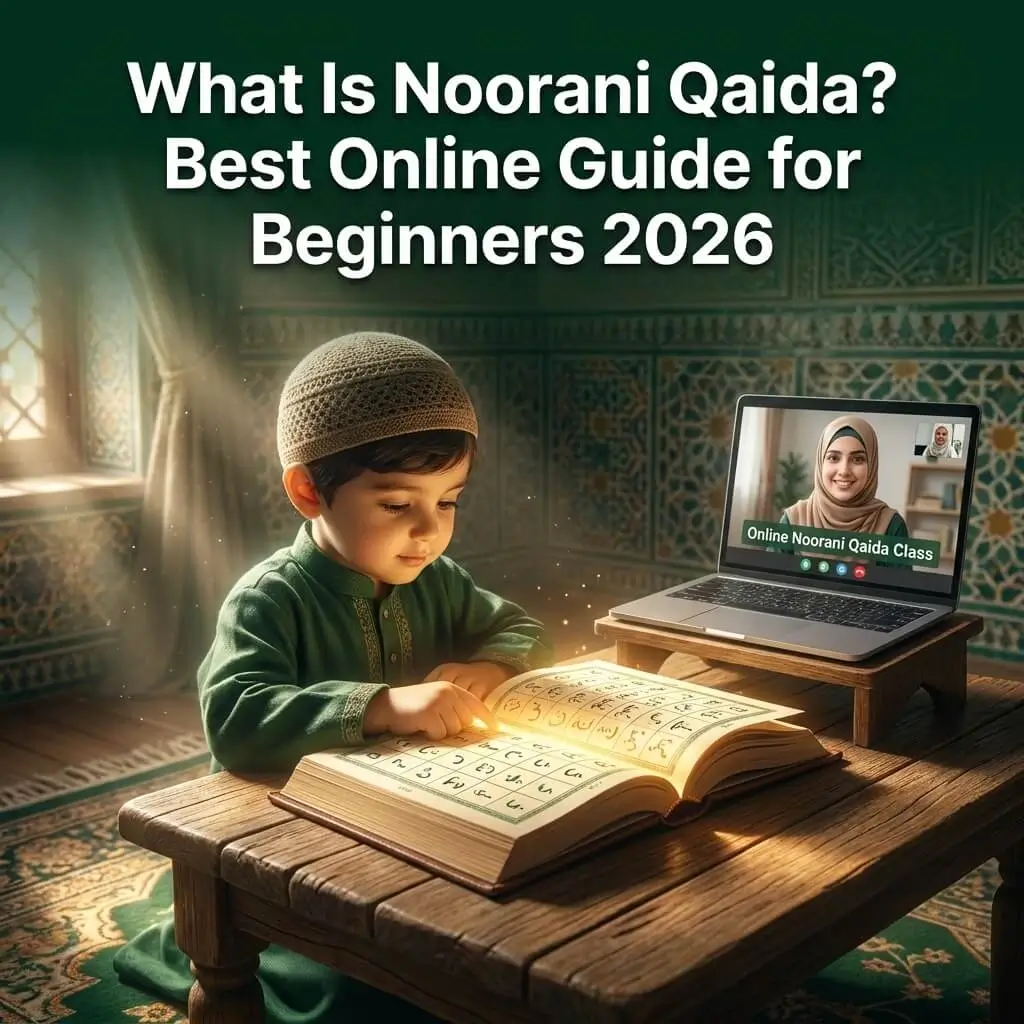
The booklet is organized into 16 or 17 lessons depending on the edition, and each one builds directly on what came before. Here’s what that progression looks like in practice:
Arabic Alphabet and Letter Shapes
Everything begins with the 28 individual Arabic letters, their names, their shapes, and their sounds. This is the Huroof-e-Mufridat stage. Students don’t just memorize letter names; they learn where each sound comes from in the vocal anatomy. Some letters originate deep in the throat, others from the tip of the tongue, and others from the lips. Getting this right in the first two lessons determines how accurately the student will pronounce for the rest of their life.
Lesson 2 introduces compound letters with the same alphabet characters in their joined forms, because Arabic letters change shape depending on whether they appear at the beginning, middle, or end of a word. A learner who hasn’t mastered compound letter recognition will struggle every time they encounter a word they haven’t seen before.
Abbreviated Letters (Huroof-e-Muqatta’at)
Certain Surahs of the Quran open with isolated letters: Alif Lam Meem, Ha Meem,Ya Seen. These aren’t words. They’re individual letters recited by name, and their pronunciation follows specific rules. Lesson 3 introduces these mysterious openings of Quranic chapters and trains the student in how they’re properly recited.
Harakat: The Vowel System That Brings Letters to Life
This is where Noorani Qaida moves from recognition to recitation. Arabic letters without vowel marks are silent outlines. The Harakat, the small markings placed above or below a letter, determine its sound. The three foundational vowel marks are Fatha (a short “a” sound, written as a small diagonal line above the letter), Kasra (a short “i” sound, written below), and Damma (a short “u” sound, written above as a small curl). These three marks appear on virtually every letter in the Quran, and fluency in reading them is the single most important milestone in early Quranic learning. Lessons 4 through 6 drill Harakat is deeply into letter combinations, word-level practice, and beginning to connect sounds into recognizable units.
Tanween, Standing Vowels, and Madd Letters
Tanween is the double vowel mark that produces an “-un,” “-an,” or “-in” ending sound on Arabic words. They appear frequently in Quranic recitation and have specific rules for how they’re pronounced at the end of a verse versus in the middle of one. Standing vowels the vertical Fatha, Kasra, and Damma, appear on certain specific letters in the Quran and indicate elongation. Madd letters (Alif, Waw, and Yaa in their vowel-carrying forms) introduce the concept of elongation itself: holding a sound for exactly two counts before moving on. Getting Madd right is one of the clearest markers of whether a student has truly absorbed their Harakat work.
Sukoon, Shaddah, and Word Building
Sukoon is the circle mark that appears above a letter to indicate it carries no vowel; it produces a sharp, stopped consonant sound. It’s the absence of sound that creates rhythm in Arabic recitation. Shaddah is the doubling mark. When a letter carries this mark, it means the letter is pronounced twice, creating emphasis and force. Together, Sukoon and Shaddah are what allow a learner to read multi-syllable Arabic words with the correct weight and rhythm. Sukoon also opens the door to understanding Noon Sakinah rules, the basis for Idgham, Ikhfa, Iqlab, and Izhar that students will encounter in dedicated Tajweed study later.
Qalqalah, Advanced Rules, and Quranic Recitation Practice
The final lessons bring together everything learned and apply it to actual Quranic content. The slight bouncing or echoing sound produced on certain letters when they carry Sukoon is introduced here. Students then practice reading full Quranic words, phrases, and short verses. By the final lesson, someone who started with zero knowledge of Arabic script can read actual ayahs from the Quran with correct pronunciation and basic Tajweed principles in place. This is not a small thing. This is the foundation everything else is built upon.
Why You Cannot Skip Noorani Qaida and Jump Straight to the Quran
Adults especially are tempted to skip ahead. The Qasida can feel remedial, like practicing scales before you’re allowed to play a real song. But the comparison is exactly right, and musicians will tell you that skipping foundational practice never saves time in the long run.
The specific problem with skipping Noorani Qaida is that the Quran is written in a script with sounds that must be learned, not guessed. A learner who opens the Quran without Qaida training will read by substitution, replacing ح with ه, ق with ك, and ض with the closest Urdu or English consonant they know. Each of these substitutions changes the meaning of what’s being recited. In Arabic, a single letter change doesn’t just create an accent; it creates a different word entirely.
The Noorani Qaida directly covers Madd Al-Tabee’i, Sukoon, Shaddah, Ghunnah, and leen letters. Students don’t just learn letter shapes; they learn how each letter is produced and how vowel markers change its sound. Trying to absorb all of that while simultaneously attempting to read Quranic verses is simply too much at once. The Qaida sequences these building blocks so that each one is mastered before the next is introduced. That sequence is what makes fluency achievable.
How to Learn Noorani Qaida Online: A Practical Step-by-Step Approach
Choose a Platform with Certified, Live Instructors
The most important decision you’ll make is who you learn from. Pre-recorded video lessons and apps have their place as supplementary tools, but they cannot replace a live teacher who listens to your recitation and corrects your pronunciation in real time. Mispronunciation of Arabic letters is the single most common and persistent problem beginners face, and it cannot be identified or fixed by software.
Look for academies that employ Ijazah-certified tutors. Ijazah is the traditional Islamic certification for Quran teaching. A teacher who holds it has been tested and authorized through an unbroken chain of teachers tracing back to the Prophet ﷺ. It’s the gold standard of qualification in this field. Also confirm whether the platform offers one-on-one sessions. Group classes can work, but individual instruction is far more effective for pronunciation learning because the teacher’s full attention is on your specific errors.
When choosing an online platform, check tutor credentials to ensure they are certified and experienced; read testimonials from previous students; assess the technology used for seamless communication; look for scheduling flexibility; and verify that the course covers all essential Noorani Qaida topics, including Tajweed rules.
Take a Free Trial Before Committing
Almost every reputable online Quran academy offers a free trial class. Use it properly. Pay attention to three things: how clearly the teacher explains letter sounds, whether they correct your pronunciation actively during the lesson rather than just moving on, and whether the session feels structured or improvised. For parents enrolling children, the trial class also reveals whether the teacher knows how to hold a young learner’s attention, which is a specific skill separate from Quranic knowledge.
Establish a Fixed, Consistent Practice Routine
The difference between students who finish Noorani Qaida in three months and those who take a year is almost never talent. It’s consistent. Daily practice between sessions, even fifteen to twenty minutes, reinforces what was covered in class and prevents the backsliding that happens when there are long gaps between lessons.
Fix a specific time every day. After Fajr is ideal for many learners; the house is quiet, the mind is fresh, and there’s a natural spiritual alignment to starting the day with Quranic study. If that doesn’t work for your schedule, after school or before dinner are equally effective slots. The specific time matters less than protecting it every single day.
Read Aloud, Always
This bears emphasis because it’s so commonly ignored: Noorani Qaida must be practiced out loud. Arabic pronunciation is a physical skill. The makharij, the articulation points, are in your throat, on your tongue, and between your lips. You cannot develop muscle memory for them by reading silently. Every practice session should involve actual vocalization, even if it’s just a quiet recitation to yourself.
Use Supporting Materials Between Sessions
Quality online academies provide the Noorani Qaida PDF, audio recordings of correct letter pronunciation, and printable worksheets. Download everything and use it. Listening to a certified Qari recite the letters even passively in the background while you’re preparing for class trains your ear to recognize correct pronunciation, which directly translates into better performance in your next session.
Progress at Your Own Pace, Without Rushing
Like any new skill, learning Noorani Qaida requires time, repetition, and persistence. Some letters are more difficult to pronounce, and mistakes are part of the process. The online format’s greatest advantage is exactly this: the pace adapts to the individual learner. A student who needs five sessions on Harakat before the sounds become natural gets five sessions. A student who progresses quickly through the early lessons can move forward without waiting for anyone else.
Rushing through lessons to reach the Quran faster is the most common mistake serious learners make. The letters you master thoroughly in Noorani Qaida are the letters you’ll recite correctly for the rest of your life. The ones you skim over become the errors that surface in every surah thereafter.
Common Mistakes Beginners Make While Learning Noorani Qaida Online
Understanding the typical errors in advance helps you avoid them:
Confusing similar-looking letters: Arabic has several sets of letters that share the same base shape with different dot positions. ب، ت، ث are one such set. ح, ج, and خ are another. These letters sound completely different, and mixing them up changes the meaning of words. Practice these letter pairs in isolation not just sequentially through the alphabet, until the distinction is automatic.
Neglecting Harakat in favor of memorization: Some beginners try to memorize the “look” of common words rather than properly internalizing the vowel system. This works temporarily and then collapses as soon as they encounter a word they haven’t seen before. The vowel marks are the system learning system, not the patterns.
Practicing silently: Already mentioned, but worth repeating. No amount of silent reading trains the physical pronunciation skills that Quranic recitation requires. Read out loud every single time.
Using transliteration as a long-term tool: English apostrophe, the vision of Arabic sounds, writing “Alif” as “a,” and “Ayn” as an apostrophe is a rough approximation that works for very basic orientation. It cannot capture the emphatic letters, the throat sounds, or the distinction between light and heavy consonants. Treat it as a temporary orientation guide only and move away from it as quickly as possible.
Skipping revision between lessons: Each Noorani Qaida lesson builds on the previous one. A student who doesn’t revise Harakat before moving to Tanween will struggle with Tanween. A student who doesn’t consolidate Sukoon will find Shaddah confusing. Spend five minutes at the start of every session revising the previous lesson before moving forward.
How Long Does It Actually Take to Complete Noorani Qaida Online?
Most students complete the full Noorani Qaida curriculum in three to six months. The range depends on several real factors:
Class frequency is the biggest variable. Two to three sessions per week consistently produces completion in three to four months. One session per week typically extends the timeline to five to seven months, especially if daily home practice isn’t happening.
Age also plays a role, though perhaps not in the way most people assume. Young children (ages four to seven) often take longer than older learners because sessions are shorter and attention spans require more creative teaching approaches. However, children typically end up with better pronunciation accuracy than adults who learned faster because their ears and vocal muscles absorb sounds more naturally during those developmental years. quickly but
Adults starting from zero can move through the conceptual lessons quickly, but usually need more time on the unfamiliar sounds Ayn, Ghayn, Qaf, and Tha that simply don’t exist in most languages. Patience with these specific letters pays dividends permanently.
What Comes After Noorani Qaida? The Path Forward
Finishing Noorani Qaida is a genuine achievement, and it’s the opening of a door, not the end of a road. The path forward typically follows this sequence:
- Quran Nazra: Reading the Quran from cover to cover with correct pronunciation, applying everything learned in the Qaida. The goal is fluency, moving through a page smoothly, without stopping to decode individual letters.
- Tajweed Rules Course: While Noorani Qaida introduces the basics of Tajweed, a dedicated course goes much deeper, covering Idgham, Ikhfa, Iqlaand the, Qalqalah rules, Ghunnah, and the rules of Waqf (stopping at the end of a verse). This is where recitation moves from accurate to melodious.
- Hifz (Quran Memorization): For students who want to memorize the Quran, a clean Noorani Qaida foundation is essential. Hifz done with incorrect pronunciation means memorizing errors along with the text. Starting right matters enormously here.
- Tafseer and Quran Translation: Understanding the meaning of what you’re reciting is a lifelong journey that deepens naturally as your reading becomes more fluent.
The Spiritual Dimension: Why This Foundation Matters Beyond Skill
There is a famous hadith from the Prophet Muhammad ﷺ in which he said that the one who recites the Quran fluently will be with the noble, righteous scribes, and the one who recites it with difficulty will receive a double reward. The double reward is specifically for the effort of the person who struggles with letters but keeps going anyway.
Noorani Qaida is that struggle made productive. It’s not just a language course. For most learners, it’s the first time they’ve engaged seriously and deliberately with the Book of Allah. Every letter learned correctly, every session completed, and every mispronunciation corrected is an act of devotion in itself.
Starting is always the hardest part. The QA ladder makes the start manageable and structured and, with a good teacher, genuinely rewarding from the very first lesson.
Frequently Asked Questions
Is Noorani Qaida suitable for complete beginners with no Arabic knowledge at all?
Yes, that’s exactly who it was designed for. No prior knowledge of Arabic is required or assumed. The Qaida starts at the absolute beginning: a single letter, its sound, its shape. Everything is introduced in order of simplicity and builds progressively from there.
At what age can children start learning Noorani Qaida online?
Most children can start at age four or five. Online platforms with experience teaching young learners use child-appropriate techniques, colorful visual aids, repetition games, shorter session lengths, and patient encouragement that make the experience engaging rather than overwhelming. Many children who start at this age are reading Quranic words confidently by age seven.
Can adults learn Noorani Qaida online if they’ve never studied Arabic before?
Absolutely, and many do. Adult learners often have more self-discipline and study consistency than children, which compensates for the slightly longer adjustment period with unfamiliar sounds. One-on-one online sessions are particularly effective for adult beginners who might feel self-conscious in a group setting.
Is a live teacher really necessary, or can I learn from videos and apps?
Videos and apps are useful for supplementary practice, listening to correct letter pronunciation, reviewing material between sessions, or introducing a concept before a class. But they cannot identify and correct your specific mispronunciations. That requires a live human being who is listening carefully to your recitation. For Noorani Qaida specifically, where the entire purpose is building correct pronunciation habits, live instruction is not optional; it’s the point.
How many sessions per week are recommended for steady progress?
Two to three sessions per week, combined with fifteen to twenty minutes of daily home practice, produces the best results for most learners. This pace allows new material to be introduced regularly while giving enough time between sessions to absorb and consolidate what was covered.
What if I already “know how to read” the Quran but my pronunciation is not correct?
Revisiting Noorani Qaida with a qualified teacher is one of the most effective ways to identify and correct accumulated pronunciation errors. Many adults who learned to recite by ear or in rushed group settings find that a structured return to the Qaida, focusing specifically on the letters they’ve been mispronouncing, transforms their recitation in a matter of months.
Final Thoughts
Understanding what Noorani Qaida is and how to learn it online is really understanding where the entire journey of Quranic education begins. It’s the first step, and as anyone who has taken it properly will tell you, it’s the step that makes every step afterward possible.
The method is over a century old. It works because it’s built around how human beings actually learn sounds slowly, with repetition, with immediate feedback, progressing from simple to complex in a sequence that doesn’t skip anything important. Online learning has simply made the method available to anyone with an internet connection and the intention to begin.
If you’re a parent wondering when to start your child, the answer is now. If you’re an adult who has been putting it off, the answer is still now. The Quran isn’t going anywhere. Neither is the foundational work required to read it properly. But the best time to build a foundation is always before you need it.
