 Skip to content


If you’re beginning your journey into Islamic history, few topics are as profound, or as life-changing, as learning about Prophet Muhammad ﷺ and the remarkable people who surrounded him. His life story isn’t just history, it’s a living guide for billions of Muslims across the world, studied by scholars, memorized by students, and referenced in daily prayers and decisions.
Today, many families connect with this rich heritage by enrolling in premium Quran classes usa platforms to build a strong foundation. For advanced students who wish to dive deeper into the traditional methods of preservation, learning to Learn Ten Qirat Online provides a beautiful opportunity to master the diverse prophetic styles of recitation. This guide breaks it all down clearly and meaningfully for anyone starting from scratch.
Who Was Prophet Muhammad ﷺ? A Beginner’s Overview
Prophet Muhammad ibn Abdullah was born in Makkah, in the Arabian Peninsula, in approximately 570 CE. This was a year historians often call the “Year of the Elephant,” a reference to an event involving an Abyssinian army that attempted to destroy the Kaaba.
He was born into the noble Quraysh tribe, specifically the Banu Hashim clan, a lineage of respected leaders and traders.
For families looking to teach this rich history to their children from an authentic source, enrolling them in a structured Islamic education program online is a highly effective way to start.
His father, Abdullah, passed away before he was born, and his mother, Aminah bint Wahb, died when he was just six years old. He was then raised by his grandfather, Abd al-Muttalib, and later by his uncle, Abu Talib, a man who would protect him throughout his prophethood despite never formally accepting Islam. Today, keeping youngsters connected to these inspiring stories of the Prophet’s upbringing is made easier through interactive Online quran classes for teens USA platforms.
From a young age, Muhammad ﷺ was known for two qualities that would define him: Al-Amin (the Trustworthy) and Al-Sadiq (the Truthful). These weren’t honorary titles given after his prophethood, they were names the people of Makkah themselves gave him, long before any revelation came. Readers exploring the Biography of Prophet Muhammad will find that these qualities earned him the respect and trust of his community even before the beginning of his prophetic mission.
He worked as a shepherd in his early years, then became a merchant…
If you are residing in the Southern region and want to explore these profound historical lessons with expert guidance, signing up for reputable Online quran classes Georgia will help you achieve your spiritual goals right from home.
The First Revelation and the Beginning of Prophethood
At the age of 40, while in seclusion in the Cave of Hira on the outskirts of Makkah, Muhammad ﷺ received the first verses of the Quran through the Angel Jibreel (Gabriel). The command was simple and shattering: “Read! In the name of your Lord who created.” (Quran 96:1)
Shaken, he returned to Khadijah, who wrapped him in a blanket and reassured him. She then took him to her cousin Waraqah ibn Nawfal, a Christian scholar, who confirmed that what Muhammad had experienced was divine revelation—the same that had come to Moses before him.
This marked the beginning of a 23-year period of prophethood. The first 13 years were spent in Makkah, where the message of monotheism (Tawheed) was preached in secret and then openly. The last 10 years were in Madinah, where the Muslim community grew into an organized society with governance, laws, and institutions.
The Hijra: The Migration That Changed History
As opposition from the Quraysh intensified—with persecution, boycotts, and plots against the Prophet’s life—the early Muslims were commanded to migrate to Madinah (then called Yathrib) in 622 CE. This migration, known as the Hijra, is so significant that the Islamic calendar begins from this date.
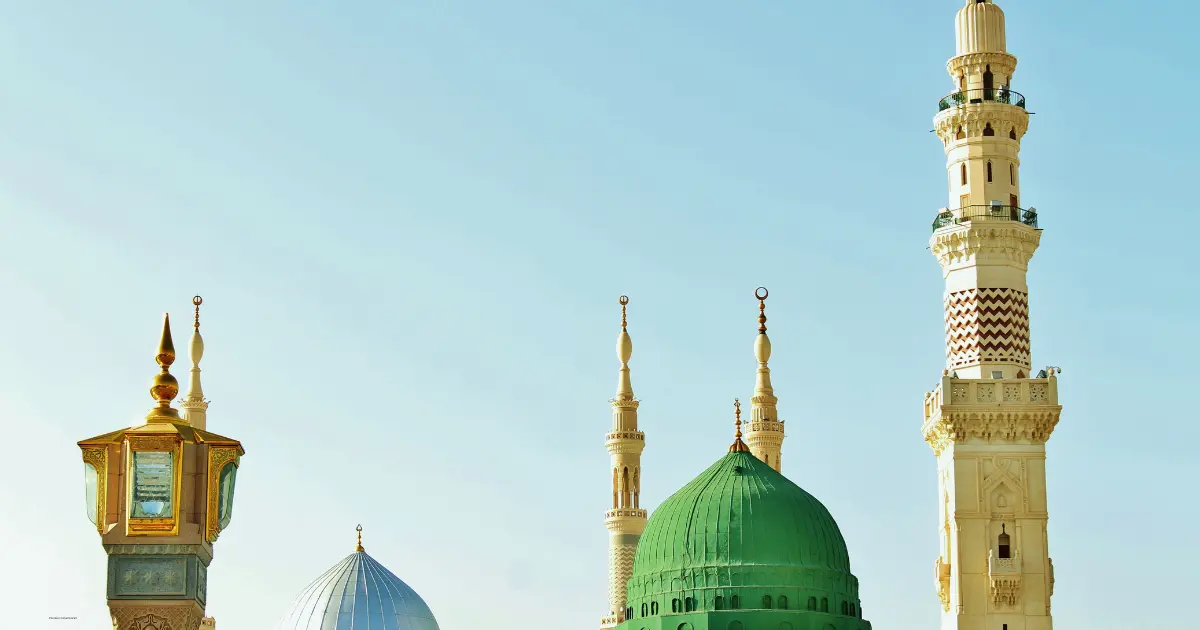
The Prophet ﷺ arrived in Madinah to a joyful reception. Here he established the first mosque (Masjid Quba), drafted the Constitution of Madinah (a pioneering document of civil governance), and began building the Muslim Ummah (community) in earnest.
Who Were the Companions of Prophet Muhammad? (The Sahabah)
“Sahabah” (singular: “Sahabi”) refers to those who were companions of Prophet Muhammad ﷺ—those who lived during his time, believed in him, and spent time in his presence as Muslims. They are among the most studied, admired, and honored figures in Islamic history.
The Prophet ﷺ described them with reverence:
“The best of people are those of my generation, then those who come after them, then those who come after them.” (Sahih Bukhari)
There were thousands of companions — some estimates suggest over 100,000 — but certain individuals stand out for their closeness to the Prophet, their sacrifices, and their lasting contributions to Islam.
The Four Rightly Guided Caliphs (Al-Khulafa Al-Rashidun)
These four companions are considered the closest to the Prophet ﷺ and became the leaders of the Muslim community after his passing:
| Caliph | Relationship to Prophet | Known For | Period of Rule |
| Abu Bakr Al-Siddiq | Father-in-law (the prophet married Aisha) | First Caliph, closest friend | 632–634 CE |
| Umar ibn Al-Khattab | Father-in-law (the prophet married Hafsa) | Expansion of Islamic state | 634–644 CE |
| Uthman ibn Affan | Son-in-law (married two daughters) | Compilation of the Quran | 644–656 CE |
| Ali ibn Abi Talib | Cousin and son-in-law | Knowledge and bravery | 656–661 CE |
Abu Bakr Al-Siddiq (RA)
Abu Bakr was the Prophet’s most trusted companion, the first adult male to accept Islam, and the one chosen to accompany the Prophet during the Hijra. He was given the title Al-Siddiq (the Truthful) for his unwavering belief. When the Prophet passed away in 632 CE, it was Abu Bakr who steadied the community with the famous words: “Whoever worshipped Muhammad — Muhammad has died. Whoever worships Allah—Allah is Ever-Living and never dies.”
Umar ibn Al-Khattab (RA)
Umar was initially one of the fiercest opponents of Islam before his dramatic conversion became one of the most celebrated events in early Islamic history. After embracing Islam, his strength, discipline, and justice became pillars of the community. During his caliphate, the Muslim state expanded into Persia, Syria, Egypt, and beyond—without compromising on justice or governance.
Uthman ibn Affan (RA)
Known for his immense generosity and humility, Uthman funded major Islamic campaigns from his own wealth and played a central role in standardizing the written Quran into a single unified text—one of the most consequential decisions in religious history. He is remembered as Dhun-Nurayn (Possessor of Two Lights) for marrying two of the Prophet’s daughters.
Ali ibn Abi Talib (RA)
Ali was the Prophet’s cousin and son-in-law (married to Fatimah, the Prophet’s daughter). Raised in the Prophet’s household from childhood, he embodied deep Islamic knowledge and personal courage. His narrations form a significant portion of Islamic jurisprudence and spirituality.
Other Major Companions Every Beginner Should Know
Beyond the four caliphs, many other companions shaped Islamic civilization profoundly:
Khadijah bint Khuwaylid (RA)
The Prophet’s first wife and first believer. Her emotional and financial support during the earliest and most difficult years of prophethood was irreplaceable. The Prophet ﷺ said of her: “She believed in me when no one else did.”
Aisha bint Abi Bakr (RA)
One of the most learned scholars in Islamic history. She narrated over 2,000 hadiths (sayings of the Prophet) and was consulted by the companions after the Prophet’s passing on matters of religion, medicine, and poetry. For online Quran classes for sisters in the USA and women seeking to learn their deen, Aisha represents the highest ceiling of what a female Muslim scholar can achieve.
Bilal ibn Rabah (RA)
An Abyssinian slave who was tortured for accepting Islam and freed by Abu Bakr. He became the first Muadhdhin (caller to prayer) in Islamic history. His story is one of the most powerful testaments to Islam’s message of equality and dignity. Those pursuing an Islamic education program online will find Bilal’s story featured prominently in any serious curriculum.
Salman Al-Farisi (RA)
A Persian scholar who spent years searching for the truth across religions before finding it in Islam. He suggested the strategy of digging a trench (Khandaq) during the Battle of the Trench—a tactic borrowed from Persian warfare that helped repel a massive coalition army. His inclusion among the companions is often cited when discussing Islam’s universal appeal beyond Arab culture.
Abdullah ibn Masud (RA)
One of the earliest Muslims and a master of Quranic recitation. The Prophet ﷺ recommended learning the Quran from four companions, and Ibn Masud was named first. Students enrolled in a Quran recitation course online in the USA or those wanting to learn ten qirat online will frequently encounter traditions traced back to him.
Khalid ibn Al-Walid (RA)
Initially a fierce military opponent of the Muslims, his conversion to Islam in 627 CE shifted the balance of early Islamic campaigns dramatically. He was given the title Sayfullah (Sword of Allah) by the Prophet ﷺ himself after leading multiple significant battles undefeated.
Muadh ibn Jabal (RA)
A young companion renowned for his deep knowledge of what is permissible and impermissible in Islam (halal and haram). The Prophet ﷺ said, “The most learned of my Ummah in matters of halal and haram is Muadh ibn Jabal.” His appointment as a teacher and governor to Yemen is an early model of online Quran classes for beginner adults in the USA—teaching Islam with care, structure, and patience.
The Categories of Companions
Not all companions had the same level of closeness to the Prophet. Islamic scholarship categorizes them based on their entry into Islam and their participation in pivotal moments:
| Category | Description |
| The Sabiqun Al-Awwalun | The earliest Muslims (first to believe) |
| The Muhajirun | Those who migrated from Makkah to Madinah |
| The Ansar | The helpers of Madinah who received the migrants |
| Ahl Badr | Companions present at the Battle of Badr (313 fighters) |
| Ahl Hudaybiyyah | Companions present at the Treaty of Hudaybiyyah |
| Ahl Al-Fath | Those who accepted Islam after the Conquest of Makkah |
The Muhajirun and Ansar are especially revered. The Ansar’s welcoming of the migrants is one of the most celebrated acts of brotherhood in history—each Ansar family adopted a Muhajir family as their own, sharing homes, wealth, and livelihood.
The Prophet’s Character: What Made Him Extraordinary
Understanding the Prophet’s biography means understanding his character. Those who knew him described him as the following:
-
- Approachable—He sat among the poor and the wealthy alike without distinction
-
- Gentle—He never struck a servant, a woman, or an animal in his life
-
- Just when his own daughter Fatimah was mentioned in the context of a theft case, he said, “If Fatimah bint Muhammad stole, I would cut off her hand.”
-
- Forgiving—At the Conquest of Makkah, rather than punishing those who had persecuted him for years, he granted a general amnesty
-
- Detailed in worship—His prayers, fasts, and supplications were preserved by the companions with extraordinary precision
For those exploring the online Quran—because classes for new Muslims, the character of the Prophet is often the first subject introduced—understanding him personally connects newcomers to the Quran in a deep and authentic way.
The Legacy of the Companions in Preserving Islam
The companions carried the Prophet’s message to the four corners of the world. They settled in Egypt, Iraq, Persia, Syria, Yemen, and North Africa—not only as conquerors but also as teachers, judges, and community leaders. Their methods of transmitting hadith with chains of narration (isnad) created one of the world’s most rigorous oral and written verification systems.
Students who enroll in an online ijazah program—a traditional chain of authorization in Quranic recitation or hadith—are literally connecting themselves to that unbroken chain stretching back to the companions and to the Prophet ﷺ himself.
Communities across the United States—from online Quran classes New York to online Quran classes in Texas, from online Quran classes in California to online Quran classes in Florida—are building on this same tradition, ensuring that the teachings preserved by the companions continue to reach new generations.
How to Study the Prophet’s Biography as a Beginner
If you’re just starting out, here’s a practical learning roadmap:
-
- Start with a short introductory seerah—Books like When the Moon Split by Safiur-Rahman Mubarakpuri are accessible and well-organized
-
- Study the companions individually—Each companion has a dedicated biographical tradition (tabaqat) worth exploring
-
- Connect the seerah to the Quran—Many Quranic passages were revealed in direct response to events in the Prophet’s life
-
- Take structured classes—Enrolling beginner adults in online Quran classes for beginner adults. USA that include Islamic history modules accelerates understanding significantly
-
- Use audio and visual resources—Lectures by scholars like Yasir Qadhi or Omar Suleiman are excellent supplementary tools
-
- Practice what you learn — The companions learned from the Prophet in order to act, not just to know
For families wanting to instill this love early, online Quran classes for toddlers in the USA and online Quran classes for teens in the USA offer age-appropriate introductions to the Prophet’s life and the stories of his companions.
FAQs: Biography of Prophet Muhammad for Beginners
Q: What is the biography of Prophet Muhammad called? The biography of Prophet Muhammad ﷺ is called the Seerah (also spelled Sirah). It is one of the most extensively documented life histories in human history, compiled from Hadith literature, historical accounts, and Quranic commentary.
Q: Who were the closest companions of the Prophet? The four closest companions are Abu Bakr, Umar, Uthman, and Ali — the four Rightly Guided Caliphs. Other extremely close companions include Khadijah, Aisha, Bilal, and Abdullah ibn Masud.
Q: How many companions did Prophet Muhammad have? Islamic scholarship suggests there were over 100,000 companions—those who saw the Prophet as Muslims. However, the most well-documented and cited companions number in the hundreds, with roughly 10,000 present at the Conquest of Makkah.
Q: What does “Sahabi” mean? “Sahabi” (plural: “Sahabah”) means “companion.” In Islamic terminology, it specifically refers to any Muslim who saw the Prophet ﷺ, believed in him, and died as a Muslim.
Q: Why is studying the companions important for beginners? The companions are the primary transmitters of the Quran, the Sunnah, and Islamic practice. Understanding them helps beginners contextualize the religion, understand its human dimension, and connect with a living tradition. For anyone taking online Quran classes for non-Arabic speakers or beginning Islamic studies from scratch, studying the companions provides essential historical and spiritual grounding.
Q: Is there an online way to study the Prophet’s biography? Yes. Many platforms now offer structured Seerah courses alongside Quranic studies. You can explore online Quran classes with certificates in the USA that include Islamic history modules, or join online Quran classes via Zoom & Skype for live instruction from qualified scholars. Some platforms even offer online Quran classes with a free trial in the USA so you can assess teaching quality before committing.
Q: Can non-Arabic speakers study the Prophet’s biography effectively? Absolutely. A large portion of Seerah scholarship has been translated into English and many other languages. Platforms offering online Quran classes for non-Arabic-speaking Arabic Quran speakers or taught by a native Arabic Quran teacher online in the USA can bridge the linguistic gap with proper context.
A Final Reflection
The life of Prophet Muhammad ﷺ is not a distant tale from an ancient world. It is a lived, documented, and transmitted account of a man who reshaped human civilization—and the companions who stood beside him were the reason that transformation took root. From online quran classes New York City to online quran classes Los Angeles, from online quran classes Chicago to online Quran classes Dearborn, Michigan: Muslims across the United States continue to learn, teach, and practice the tradition these companions carried forward.
Whether you’re just beginning, raising a family in the faith, or returning to Islam after time away—the story of the Prophet ﷺ and his companions is your story too. It belongs to every Muslim and to every sincere seeker. The only step required is the first one.
Begin learning. The legacy is waiting.
Looking to deepen your knowledge of the Quran and Islamic history? Explore structured options including online Quran classes, family plan USA, a Quran reading fluency course online, and online Quran classes 24/7 USA to find the learning format that fits your life.
