 Skip to content




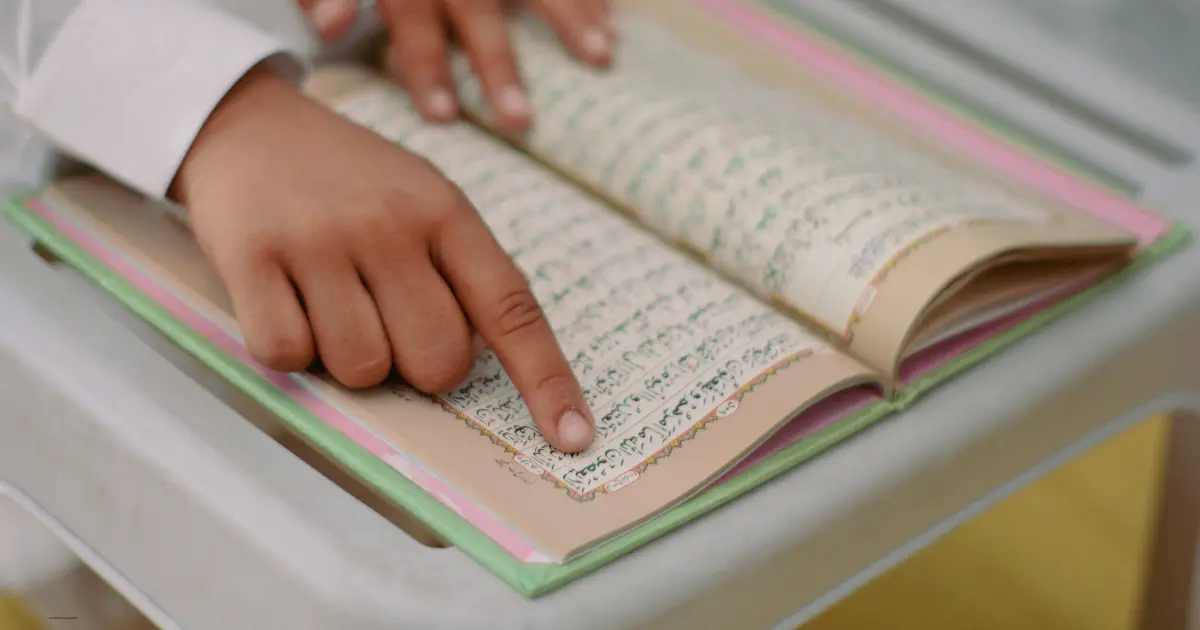
Most dedicated students can realistically memorize between half a page and 2 pages of Quran per day, depending on their age, prior Arabic familiarity, consistency, memorization method, and the quality of their teacher’s guidance. A small number of exceptionally focused full-time students can reach 3–4 pages daily. Complete beginners with no prior Arabic exposure will likely start at a few lines per day and build up gradually.
That’s the real answer. Not the inflated number that makes a program sound impressive. Not the discouraging minimum that makes the journey feel impossible. The actual, honest range that qualified Hifz teachers work with every single day.
But here’s what matters more than that number: the quality of what you memorize each day matters infinitely more than the quantity. Half a page memorized correctly, with proper Tajweed, reviewed consistently, and retained for life is worth more than three pages memorized hastily and forgotten within a month.
This guide breaks down everything — realistic daily targets for every type of learner, proven Hifz schedules, the science of Quranic retention, the biggest mistakes to avoid, and how Quran Academy USA supports students across the United States on this sacred journey.
How Many Pages of Quran Can You Memorize? The Hifz Schedule Breakdown
Before setting a daily memorization goal, you need to know what you’re working with.
The standard Mushaf (printed Quran) contains 604 pages. More specifically, the Madani Mushaf — the most widely used print format in the world and the standard used in most Hifz programs — has 604 pages with 15 lines per page and exactly 20 pages per Juz (part). The Quran has 30 Juz in total, 114 Surahs (chapters), and approximately 6,236 Ayaat (verses).
Here’s why this matters for your planning:
- 604 pages total in the standard Madani Mushaf
- 30 Juz — each Juz contains 20 pages
- 6,236 Ayaat across 114 Surahs
- Approximately 77,000 Arabic words in total
- The real number of pages to memorize, excluding Bismillah and Surah name lines, is approximately 587.
Now, with those numbers as your foundation, let’s talk about what’s realistically achievable per day.Knowing these numbers helps you better answer how many pages of Quran can you memorize realistically

How Many Pages Can You Realistically Memorize Per Day? By Learner Type
There’s no single answer that fits everyone — and any teacher or program that tells you otherwise isn’t being honest with you. Here’s what the evidence and experience of qualified Hifz teachers across the world actually shows:
Children (Ages 5–12) — The Natural Memorizers
Parents often ask how many pages of Quran can you memorize at this age, and the answer depends on consistency. Children are the most naturally gifted memorizers in the world. Their neural plasticity — the brain’s ability to form and consolidate new memory pathways — is at its peak during childhood, which is exactly why the Prophet Muhammad ﷺ said: “Seek knowledge from the cradle to the grave.”
A child aged 7–12 in a structured Hifz program with a qualified teacher, consistent daily sessions, and strong parental support can typically memorize:
- Beginners (first 3 months): 3–7 lines per day (building the foundation)
- Intermediate (3–12 months in): Half a page to 1 full page per day
- Advanced (after 12+ months): 1–2 pages per day consistently
Children can memorize 1–2 pages per day with proper guidance and repetition as a key component of their routine. The most important factor for children isn’t raw memorization speed — it’s consistency and review. A child who memorizes half a page daily without fail, six days a week, will complete the entire Quran in approximately 3.5 years — with solid retention. That’s a Hafiz for life, not just for the certificate.
For very young children aged 4–6, the goal isn’t quantity — it’s building familiarity with Quranic sounds, developing love for the Quran, and mastering Juz Amma (the 30th Juz, containing the shorter Surahs most commonly recited in Salah) as a foundation. This range shows how many pages of Quran can you memorize as a child with proper guidance.
Teenagers (Ages 13–18) — The Sweet Spot
Teenagers represent a unique opportunity in Hifz. They’re past early childhood but haven’t yet accumulated the life responsibilities that make adult memorization more challenging. For this age group, how many pages of Quran can you memorize depends heavily on whether they study part-time or full-time. A dedicated teenage student in a structured program, particularly one who has already completed Noorani Qaida and basic Tajweed, can realistically achieve:
- Focused part-time student: 1–2 pages per day
- Full-time Hifz student (Islamic school or madrasah setting): 2–3 pages per day with strong revision
Many of the most celebrated Huffaz in the Muslim world today completed their Hifz during their teenage years — a testament to what’s achievable with the right teacher, the right environment, and a sincere intention.
Adults (Ages 19+) — More Possible Than You Think
Adult Hifz carries its own unique challenges — and its own unique strengths. The challenges are obvious: jobs, families, mortgages, social obligations, and a brain that no longer learns as effortlessly as it did at age 10. But the strengths are real too: adults bring deeper spiritual connection to the memorization process, stronger Arabic comprehension, genuine intrinsic motivation, and the discipline that comes with maturity.
A realistic daily target for adult learners:
- Beginners (no prior Arabic or Tajweed): 3–5 lines per day initially, building toward half a page
- Intermediate adults (some Quranic reading ability): Half a page to 1 page per day
- Experienced adults (strong Tajweed, prior partial Hifz): 1–2 pages per day
Even dedicating 10–15 minutes each day can yield steady results over time — short, regular sessions reinforce memory better than long, irregular study periods.
The most important thing for adult learners to hear is this: it is never too late. There are documented cases of people completing Hifz in their 50s, 60s, and beyond. The journey takes longer for adults — but the spiritual depth, the understanding of what’s being memorized, and the intentionality of an adult’s commitment make the achievement profoundly meaningful in ways that are different from childhood memorization.
Converts (Reverts) to Islam — Starting from Zero
For Muslims who came to Islam as adults — often without any prior exposure to Arabic, the Arabic alphabet, or Quranic recitation — the Hifz journey begins with a different starting point. Before memorizing pages, a convert student needs to:
- Learn the Arabic alphabet and basic phonology (Noorani Qaida — typically 3–6 months)
- Develop basic Tajweed proficiency sufficient for accurate recitation
- Begin memorization with Juz Amma (the shorter Surahs) before advancing to longer sections
Once that foundation is in place, convert learners can absolutely pursue Hifz — and many have. The initial daily target will be smaller (a few lines), but with consistency and a qualified teacher’s guidance, the pace builds naturally over time.
The Hifz Schedule — Realistic Plans Based on How Many Pages You Memorize Per Day
Here’s what the math looks like when you map daily memorization targets against the standard 604-page Mushaf. Use this to set a realistic personal goal. The table below answers exactly how many pages of Quran can you memorize based on your daily commitment.
H3: Hifz Schedule Comparison Table
| Daily Pages | Weekly Pages | Monthly Pages | Estimated Completion Time |
| ¼ page (3–4 lines) | ~1.5 pages | ~6–7 pages | 7–8 years |
| ½ page | ~3 pages | ~15 pages | 3.5–4 years |
| 1 page | ~6 pages | ~30 pages | ~2 years |
| 1.5 pages | ~9 pages | ~45 pages | ~16 months |
| 2 pages | ~12 pages | ~60 pages | ~10–11 months |
| 3 pages | ~18 pages | ~90 pages | ~6–7 months |
| 4 pages | ~24 pages | ~120 pages | ~5 months |
Note: These timelines assume 6 days of new memorization per week, with the 7th day dedicated entirely to Murajaah (revision). They also assume a qualified teacher providing regular correction and oversight.
This breakdown makes it clear how many pages of Quran can ou memorize to reach your personal goal. If one commits to memorizing a page a day, the process spans around 600 days — roughly a year and 10 months. Doubling to two pages daily reduces this to approximately 300 days, while three pages daily can complete the Quran in roughly 6.5 months.
Important Caveat — Memorization Time vs. Total Hifz Session Time
There’s a critical distinction that many learners miss: the time spent on new memorization is only part of your daily Hifz session. A complete daily Hifz routine includes:
- Sabaq (New lesson): New pages being memorized today
- Sabqi (Recent review): Review of the last 5–10 pages memorized (still “fresh” in memory)
- Manzil (Old review): Review of older memorized sections to prevent forgetting
The golden rule of Hifz is simple: new memorization is silver, but review is gold. A student who memorizes five lines a day but never reviews will lose everything within a month. If you have one hour for the Quran, spend 20 minutes on new memorization and 40 minutes on review.
This means your total daily Quran time needs to be longer than just the time for new memorization. A student memorizing 1 page per day should plan for at least 1.5–2.5 hours total daily — combining new memorization with systematic revision.
Hifz Schedule for Beginners — Where to Start if You’re New to Memorization
Understanding how many pages of Quran can you memorize is only half the equation — revision time matters just as much. One of the most common mistakes beginners make is jumping straight into a high daily target and burning out within weeks. The Hifz journey is a marathon — measured in years, not sprints. Starting with a sustainable, achievable daily target and building it gradually is the approach that qualified Hifz teachers consistently recommend.
The Beginner’s 90-Day Foundation Plan
New students often ask how many pages of Quran can you memorize in their first month.
Month 1 — Building the Habit (Not the Quantity)
Knowing how many pages of Quran can you memorize is only useful if you also know when to memorize them.
- Daily target: 3–5 lines of new memorization
- Session length: 30–45 minutes
- Focus: Establishing the daily habit, learning the correct recitation with Tajweed before attempting memorization, getting familiar with the Mushaf format
- Start with: Surah Al-Fatiha, then Juz Amma (30th Juz) — the shorter Surahs that form the foundation of every Muslim’s daily Salah
The goal of Month 1 is not speed. It’s building the neural and spiritual habit of sitting with the Quran every single day at the same time, in the same place, with the same focused intention.
Month 2 — Building Momentum
- Daily target: 5–7 lines (approaching half a page)
- Session length: 45–60 minutes
- Focus: Strengthening revision habits alongside new memorization, beginning to recite memorized material in Salah to reinforce retention
- Milestone: Completing several full Surahs from Juz Amma
Month 3 — Establishing Your Pace
- Daily target: Half a page to 1 page (based on personal capacity)
- Session length: 60–90 minutes
- Focus: Developing the Sabaq-Sabqi-Manzil (new lesson, recent review, old review) triple-layer revision system
- Milestone: Completing Juz Amma and beginning Juz 29 or starting from Surah Al-Baqarah
By the end of 90 days, a beginner following this plan with a qualified teacher will have a realistic, sustainable pace established — and the habit deeply rooted.
Hifz Schedule for Beginners — Best Times of Day for Memorization
Timing matters more than most learners realize. The brain’s memory consolidation processes are not equal across the day — and Islamic tradition has consistently pointed to specific times that align remarkably well with what modern cognitive science confirms.
After Fajr (Dawn Prayer) — The Gold Standard Morning hours after Fajr are the most recommended time for memorization, as the mind is fresh and focused. The pre-dawn hours represent a state of mental clarity — the distractions of the day haven’t begun, the brain is rested from sleep-based memory consolidation, and the spiritual atmosphere of the post-Fajr time carries its own barakah (blessing). Every qualified Hifz teacher will tell you the same thing: your best memorization happens in these hours.
After Asr or Maghrib — The Revision Window Evening time — particularly after Asr or between Maghrib and Isha — is well suited for Murajaah (revision) rather than new memorization. Use this time to review what you memorized in the morning, reinforcing the retention before sleep.
Before Sleep — The Consolidation Window After the Witr prayer, spend ten minutes reviewing all the sections memorized that day. This final review before sleep takes advantage of the brain’s nocturnal memory consolidation processes — sleep is when the hippocampus transfers newly encoded information into long-term memory storage. Reviewing just before sleep maximizes this natural process.
How Long Does It Take to Memorize the Quran? — Realistic Timelines
This is the question behind the question. When people ask how many pages they can memorize per day, what they really want to know is: how long will this take me? This question is closely tied to how many pages of Quran can you memorize on average each day.
Here’s an honest, level-headed answer based on the experience of Hifz teachers and the data from thousands of students.
The Average Time to Memorize the Quran
The average time to memorize the Quran is between 2 to 5 years for a dedicated, part-time student. This is the most realistic window for the majority of learners — children in a structured after-school or weekend Hifz program, working adults dedicating an hour or more per day, or teenagers balancing school with a serious Hifz commitment.
The extremes exist on both ends. Some full-time students in dedicated Hifz schools — particularly young children aged 7–12 with exceptional focus and strong teacher guidance — complete Hifz in 12–18 months. Some adult part-time learners, working around full-time jobs and family responsibilities, take 6–8 years. Both are valid. Both are Hifz.
What matters is not the duration. What matters is that the memorization is accurate, Tajweed-correct, and retained for life — not just completed for a ceremony.
Factors That Determine Your Personal Timeline
Each of these factors directly affects how many pages of Quran can you memorize consistently.
Age: Younger students have greater neural plasticity and generally memorize faster. This doesn’t mean adults can’t achieve Hifz — it means adults need to work smarter with proven retention systems.
Prior Arabic and Tajweed knowledge: A student who can read Quranic Arabic fluently with correct Tajweed before beginning Hifz will memorize significantly faster than a student who is learning to read and memorize simultaneously. This is why investing in Tajweed foundations before beginning Hifz is strongly recommended.
Daily consistency: Instead of memorizing long portions in one sitting and neglecting them later, focus on small, consistent efforts daily — steady practice beats sporadic intensity. Missing days is the single biggest factor that extends completion timelines.
Quality of teacher: A qualified Hafiz or Hafiza who reviews your recitation regularly, catches errors before they solidify, and guides your revision system makes an enormous difference in both speed and accuracy. Students with strong teacher oversight consistently outperform self-guided learners.
Revision discipline: Memorizing without systematic revision is like filling a leaking bucket. The Murajaah system — daily review of recent pages and regular cycling through older memorized sections — is what converts short-term memorization into permanent retention.
Spiritual state: This is rarely discussed in secular language, but it’s acknowledged across the Islamic scholarly tradition. The Quran is not an ordinary text, and its memorization is not an ordinary cognitive task. Maintaining Wudu (ritual purity), praying Tahajjud (night prayer), avoiding major sins, and making consistent Du’a for Allah’s help are consistently cited by scholars and successful Huffaz as factors that facilitate memorization in ways that go beyond the purely cognitive.
Quran Memorization Tips for Adults and Children — What Actually Works
Tips That Work for Everyone
These tips will help you increase how many pages of Quran can you memorize without sacrificing accuracy.
Use the same Mushaf every single time. Visual memory is a powerful memorization tool. Use the same Mushaf edition to leverage visual memory and prioritize the early morning post-Fajr for peak mental clarity and absorption. Your brain encodes not just the text but the visual layout of the page — the position of words on specific lines. Switching between different editions disrupts this visual encoding and slows memorization significantly.
Listen before you memorize. Before attempting to memorize a new page or section, listen to it being recited by a proficient Qari — Sheikh Mahmoud Khalil Al-Husary’s Muallim (teaching) recitation is widely recommended for learners, as it recites each verse twice at a clear, measured pace. Hearing the correct pronunciation, rhythm, and melody before memorizing prevents errors from embedding into memory.
Break pages into three-line sections. Each section should ideally have three lines — approximately 20 words. Dedicate ten minutes after each of the five daily prayers to memorize one section. This five-prayer distribution system is elegant in its simplicity: by the end of the day, you’ve memorized one full page — not through a single exhausting session, but through five focused 10-minute intervals distributed naturally across your prayer schedule.
Recite aloud — always. Silent reading is not memorization. The Quran was revealed as a spoken, recited text — Quran itself means “recitation.” Your Makharij al-Huruf (articulation points), your breath control, and your Tajweed all need to be activated during memorization, not just during testing. Reciting aloud also engages auditory memory alongside visual memory, creating multiple encoding pathways for each verse.
Connect meaning to memorization. Linking the meaning (Tafsir) to the verse creates mental hooks that dramatically improve retention. When you understand that “Inna ma’al usri yusra” (إِنَّ مَعَ الْعُسْرِ يُسْرًا) — “Verily, with hardship comes ease” (Surah Al-Inshirah 94:6) — is a divine promise given during one of the most difficult periods of the Prophet’s ﷺ mission, the verse carries emotional and contextual weight that makes it infinitely easier to retain than an abstract string of Arabic words.
The 5:1 Revision Rule. To memorize the Quran and never forget it, prioritize Murajaah (revision) over new memorization using the “5:1 Rule” — review 5 pages for every 1 new page learned. This ratio feels counterintuitive to eager beginners who want to push forward quickly, but experienced Hifz teachers are unanimous: students who rush new memorization at the expense of revision don’t finish stronger — they finish with gaps, errors, and sections they can no longer recite confidently.
Specific Tips for Children
Following these tips improves how many pages of Quran can you memorize as a child without burnout.
Keep sessions short and joyful. Short daily sessions — ten to fifteen minutes rather than long weekly sessions — help reinforce memory better. A child who loves their Quran time will return to it willingly. A child who dreads long, exhausting sessions will resist. Shorter sessions with positive reinforcement (genuine encouragement, not just material rewards) build the intrinsic love for the Quran that sustains Hifz for a lifetime.
Make Salah the review ground. Encourage children to recite their newly memorized Surahs and pages in their voluntary prayers (Sunnah and Nafl Salah). This serves two purposes simultaneously: it embeds the memorization through active recall in a real context, and it builds the habit of using memorized Quran in worship — which is, after all, the ultimate purpose of Hifz.
Never push through incorrect recitation. A child who memorizes an Ayah with a Tajweed error will encode that error permanently. It is always better to slow down, correct the mistake with the teacher’s help, and then re-memorize the corrected version. The time cost of correcting an error later is far greater than the time cost of getting it right the first time.
Specific Tips for Adults
Build around your prayer schedule. The most sustainable Hifz routine for a working adult is one built around the five daily prayers — not carved out of an already packed schedule as a separate activity. Post-Fajr new memorization. Post-Asr recent review. Post-Isha old review. Three natural review windows already built into every Muslim’s day.
Understand what you memorize. Adults have a significant advantage over children in this regard: the cognitive capacity to understand the meaning, context, and Tafsir of what they’re memorizing. Use it. Read the translation and a brief Tafsir commentary alongside your memorization. The deeper comprehension not only makes memorization faster — it transforms the entire experience from a cognitive exercise into an act of spiritual connection.
Be honest about your capacity. Setting an unrealistically high daily target, failing to meet it consistently, and experiencing guilt about the failure is one of the most common reasons adult Hifz journeys stall. Set a daily target you can genuinely meet on your hardest days — not your easiest days. Half a page consistently every single day will take you further than 2 pages on good days and nothing on difficult ones.
The Biggest Mistakes That Slow Down Hifz — And How to Avoid Them
Avoiding these mistakes protects how many pages of Quran can you memorize from being wasted effort.
Mistake 1 — Prioritizing New Memorization Over Revision
This is the most common and most damaging mistake in Hifz. Students get excited about progress, push forward with new pages, and neglect to review what they’ve already memorized. Within weeks, older sections become shaky. Within months, they’ve effectively lost significant portions of what they worked so hard to memorize.
The fix: Build a non-negotiable Murajaah session into every single day before beginning new memorization. Revision is not optional — it is the foundation on which all new memorization rests.
Mistake 2 — Memorizing Without Tajweed Correction
Memorizing the Quran with Tajweed errors is not just a technical problem — it’s a spiritual one. The Prophet Muhammad ﷺ received the Quran through Jibreel (AS) with precise Tajweed, and that precision has been preserved through an unbroken chain of transmission for over 1,400 years. Embedding errors into your memorization disrespects that chain and creates habits that become increasingly difficult to correct.
The fix: Never memorize a verse you haven’t first recited correctly to your teacher. Every page of new memorization should begin with recitation to the teacher for Tajweed verification — not just periodic check-ins.
Mistake 3 — Inconsistency
Missing a day of Hifz doesn’t just pause your progress — it actively increases the difficulty of the next session. The forgetting curve is steep: a significant portion of new memorization fades within 24 hours without review. Missing two days can make a recently memorized page feel almost entirely unfamiliar.
The fix: Treat your daily Hifz session as non-negotiable — the way a Muslim treats the five daily prayers. Shorter sessions on difficult days are better than no session at all. Three focused lines on your hardest day is worth more than zero.
Mistake 4 — Learning Without a Qualified Teacher
Self-guided Hifz using apps, YouTube, or audio recordings alone is possible — but it carries enormous risks. Without a teacher who hears you recite, Tajweed errors embed silently. Without a teacher who monitors your revision, gaps develop undetected. Without a teacher who provides spiritual encouragement during difficult periods, motivation collapses.
The fix: Every serious Hifz student needs a qualified Hafiz or Hafiza — someone who holds Ijazah in Tajweed, has experience teaching Hifz, and can provide the regular one-on-one recitation sessions that this sacred undertaking requires.
How Quran Academy USA Supports Your Hifz Journey (EEAT)
Our teachers help you determine exactly how many pages of Quran can you memorize based on your ability.
Our Hifz Teachers — Who They Are
Every Hifz teacher at Quran Academy USA is a certified Hafiz or Hafiza who has completed the memorization of the entire Quran under qualified supervision and holds verifiable credentials. Many hold Ijazah in Tajweed — meaning their own memorization has been certified through a chain of transmission connecting back to the Prophet Muhammad ﷺ. We do not allow unqualified teachers to supervise Hifz programs, because the stakes are too high.
Our Hifz Program Structure
Our Hifz program is structured around the three-layer daily system — Sabaq, Sabqi, and Manzil — with each student receiving:
- Daily new lesson review with teacher correction of Tajweed in real time
- Personalized daily page targets based on each student’s realistic demonstrated capacity
- Structured Murajaah schedules designed to prevent forgetting of older memorized sections
- Monthly progress assessments with detailed feedback for students and parents
- Flexible scheduling across all US time zones — morning, afternoon, and evening slots for families in New York, Texas, California, Michigan, Florida, Illinois, and all 50 states
Hifz for Children at Quran Academy USA
Our children’s Hifz program uses age-appropriate teaching methods — shorter sessions, positive reinforcement, visual aids, and gamified revision techniques — to keep young learners motivated and progressing. We begin with Juz Amma and Noorani Qaida fundamentals for children who need them, ensuring every child has the Tajweed foundation in place before memorization begins in earnest.
We also maintain regular communication with parents — because a child’s Hifz journey is a family commitment, and parents who understand their child’s progress and daily targets are far better equipped to support consistent home revision.
Hifz for Adults at Quran Academy USA
Our adult Hifz program is specifically designed around the realities of American Muslim life — full-time jobs, family responsibilities, and the time zone diversity of students from the East Coast to the Pacific. We offer early morning sessions for professionals who want to memorize post-Fajr, evening sessions for those with daytime commitments, and weekend intensives for students who prefer consolidated weekly sessions.
We also understand the unique needs of converts to Islam beginning this journey — and we have teachers specifically experienced in guiding adult beginners from zero Arabic knowledge through to established Hifz progress.
Free Trial Class — No Commitment Required
We invite every student — child or adult, beginner or experienced — to book a free trial Hifz session with Quran Academy USA. Meet your teacher. Recite what you know. Ask every question about pace, method, schedule, and curriculum. Experience our teaching approach before committing to anything.
We’re confident in our teachers and our program because we’ve seen what they achieve with students across the United States — from New Jersey to Arizona, from Minnesota to Georgia.
Frequently Asked Questions
How many pages of Quran should a beginner memorize per day?
A complete beginner should start with 3–5 lines per day — not a full page. The priority in the first month is establishing the daily habit, ensuring Tajweed accuracy, and building sustainable revision routines. The quantity increases naturally as the habit and the skill both strengthen.
Is it better to memorize more pages quickly or fewer pages slowly?
Fewer pages slowly — without any hesitation. A quarter of a page memorized correctly, recited with proper Tajweed, and reviewed consistently will be retained for life. A full page memorized hastily with errors will need to be relearned, taking more total time than slower, accurate memorization would have required.
Can adults really memorize the Quran, or is it only realistic for children?
Adults can absolutely memorize the Quran — and do, regularly. The timeline is longer and the daily target may be smaller, but adult Hifz is both possible and profoundly rewarding. The spiritual depth that adults bring to the memorization process gives the achievement a dimension that childhood Hifz, however impressive, doesn’t always carry.
What is the best time of day to memorize Quran?
Post-Fajr is the gold standard — universally recommended by Hifz teachers and supported by cognitive science on circadian memory patterns. The mind is clearest, the distractions of the day haven’t begun, and the spiritual atmosphere of the early morning carries its own barakah. Evening sessions work well for revision but are generally less optimal for new memorization.
How do I stop forgetting what I’ve already memorized?
Through systematic Murajaah. Review the last 5–10 pages you memorized every single day. Cycle through older memorized Juz on a weekly rotation. Recite memorized sections in your Sunnah and Nafl prayers. The forgetting curve is steep but predictable — regular review at increasing intervals (spaced repetition) is the scientifically proven method for converting short-term memorization into permanent retention.
Do I need a teacher to memorize the Quran, or can I do it alone?
You need a teacher. Self-guided memorization using recordings or apps carries serious risks — Tajweed errors embed undetected, revision gaps develop without accountability, and the spiritual mentorship dimension of the Hifz relationship is entirely absent. The Quran was transmitted through human teachers for 1,400 years for a reason. That tradition exists because it works.
How do I start Hifz if I can’t read Arabic fluently yet?
Begin with Noorani Qaida to build Arabic reading proficiency and basic Tajweed, then move into Tajweed Al-Quran until your recitation is accurate enough for memorization. This foundational phase typically takes 3–9 months but makes the subsequent Hifz journey significantly faster and more accurate. At Quran Academy USA, we offer this integrated pathway — from Noorani Qaida through Tajweed into Hifz — as a single continuous program.
Is it sinful to start Hifz and not finish it?
Islamic scholars have addressed this question extensively. The dominant scholarly position is that abandoning Hifz midway is not sinful per se — life circumstances, health, and other responsibilities are understood. However, scholars do emphasize that beginning the memorization of Allah’s book carries a spiritual responsibility to treat it with seriousness and to make every reasonable effort to complete and maintain it. This is another reason why realistic pace-setting and sustainable scheduling from the beginning matters so much.
The Real Measure of Hifz Success
Here’s the truth that the page-count question almost always obscures: the measure of success in Hifz is not how many pages you memorized per day, or how quickly you completed the 604 pages, or how young you were when you received your certificate.
The measure of success is whether — ten years from now, twenty years from now — you can stand in Salah and recite from any Juz of the Quran with confidence, accuracy, and the Khushu’ (humility and devotion) that the words of Allah ﷻ deserve. That’s the Hafiz the Prophet Muhammad ﷺ described when he said: “The one who is proficient in the recitation of the Quran will be with the honorable and obedient scribes (angels), and he who recites the Quran and finds it difficult to recite, doing his best to recite it in the best way possible, will have a double reward.” (Sahih Muslim)
Whether that means half a page a day or two pages a day — begin where you are, with honesty about your capacity and sincerity in your intention. Get a qualified teacher. Build your revision system from day one. Show up every single day.
Allah ﷻ said: “And We have certainly made the Quran easy to remember. So is there anyone who will remember?” (Surah Al-Qamar 54:17)
He made it easy. Your job is to begin.
Book your free Hifz trial class at Quran Academy USA today — and take the first step toward carrying Allah’s words in your heart.
