



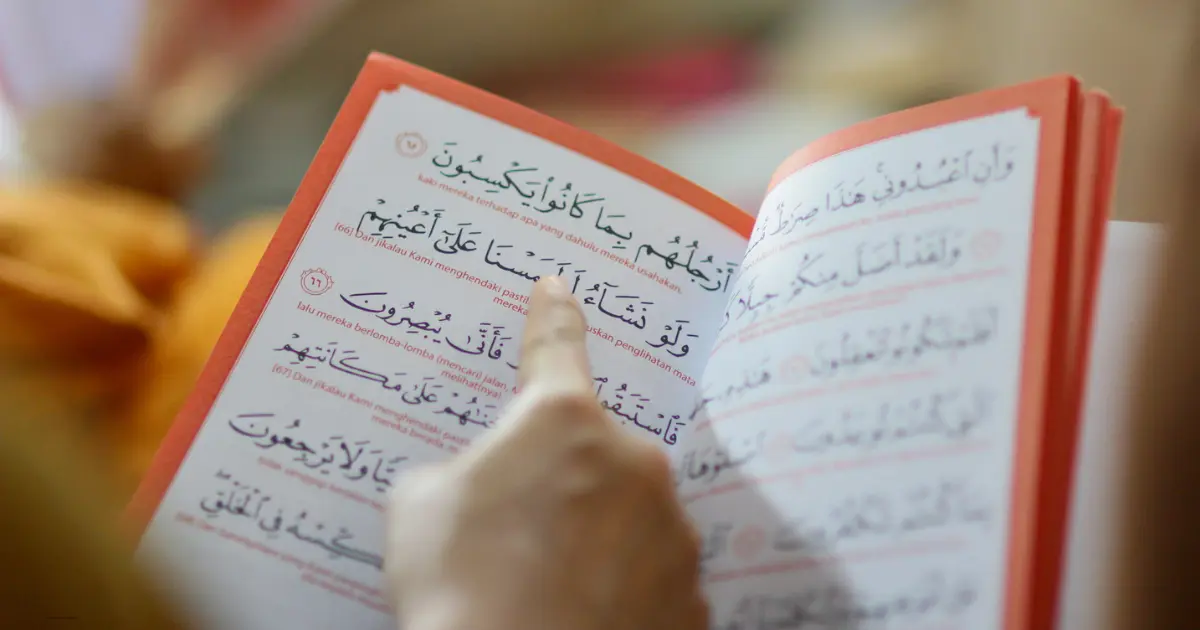
How to understand Quran in English translation means learning the meanings of the Quran through a reliable English translation while also studying its context, explanation, and guidance for daily life. English translation helps non-Arabic speakers connect with Allah’s message, but true understanding comes through reflection, Tafseer, and consistent learning.
Beginners can Understand Quran in English Translation more effectively by reading a reliable translation and studying a few verses each day.
Why the Quran Must Be Understood, Not Just Read
Every Muslim reads the Quran. Millions recite it daily in prayer. Countless others memorize it from beginning to end. Yet many Muslims especially those who do not understand Arabic move through its verses without fully understanding what Allah is actually saying to them.
This is not because they lack faith or sincerity. It is because understanding the Quran requires more than simply reading its words. Many Muslims were taught how to recite the Quran beautifully, but they were never shown how to understand its message in a language they speak and comprehend.
The Quran is not an ordinary book. It was revealed by Allah as guidance for humanity. Every verse contains wisdom, lessons, commands, warnings, promises, and solutions for the challenges people face throughout life. It speaks about faith, family, justice, patience, gratitude, repentance, and the purpose of human existence.
When a Muslim reads the Quran without understanding its meaning, they receive the reward of recitation, but they may miss much of the guidance the Quran is meant to provide. Understanding transforms Quran reading from a routine act into a personal conversation with Allah.
For a complete Islamic learning journey, consider our Islamic Education Program Online, designed to help students build a strong foundation in Quran, Sunnah, and Islamic teachings.
For English-speaking Muslims, translation serves as an important bridge between recitation and understanding. It opens the door to the meanings of the Quran and allows believers to reflect upon the message behind the verses they read.
However, translation alone cannot capture the full depth of the Arabic Quran. The Quran was revealed in a language known for its precision, eloquence, and richness. Many Arabic words carry layers of meaning that cannot be fully expressed through a single English phrase.
That is why learning how to understand Quran in English translation is so important. It allows Muslims to access the Quran’s message while also encouraging them to seek deeper understanding through Tafseer, reflection, and authentic Islamic scholarship. Students can supplement their studies by exploring trusted Quran translations available online.
What is Quran Translation in Islam Complete Meaning and Explanation
Definition of Quran Translation
Quran translation refers to the process of conveying the meanings of the Quran from Arabic into another language so that people who do not understand Arabic can learn from its message. In English translation, scholars and translators strive to communicate the meanings of Quranic verses accurately while remaining faithful to the original Arabic text.
Simply put, if the Arabic Quran contains the exact words revealed by Allah, the English translation provides an explanation of those meanings for English-speaking readers.
Translation allows Muslims to understand what Allah is saying, what guidance He is providing, and what lessons each verse contains. It makes the Quran accessible to millions of people who otherwise would not be able to engage with its message directly.
At the same time, it is important to recognize that a translation is not the Quran itself. The Quran exists only in its original Arabic form. Every translation is a human effort to communicate its meanings, and no translation can fully reproduce the linguistic beauty and depth of the Arabic revelation.
This distinction is essential because many Quranic words contain multiple layers of meaning. Translators often have to choose one English phrase to represent a word that may carry several related meanings in Arabic. As a result, translation provides access to the message of the Quran, but not always its complete depth.
What Quran Translation Includes
A quality Quran translation aims to communicate several important aspects of the Quran:
Basic Meaning of the Verse
The primary purpose of translation is to help readers understand the general meaning of Quranic verses. It explains what Allah is saying in a language that readers can understand and reflect upon.
Clear Communication
Good translations use understandable language while remaining faithful to the intended meaning of the Arabic text. The goal is to make the Quran accessible without distorting its message.
Explanation of Important Terms
Certain Quranic concepts have no perfect English equivalent. Words such as taqwa, iman, sabr, and rahmah often require additional explanation because their meanings extend beyond a single English word.
Connection Between Verses
The Quran presents themes and lessons across multiple verses and chapters. Reliable translations help readers follow these connections and understand the broader message being conveyed.
Support for Reflection
One of the Quran’s repeated commands is to reflect on its verses. Translation makes this reflection possible for readers who do not understand Arabic by giving them access to the meanings behind the words.
Difference Between Translation and Understanding
One of the biggest misconceptions among English-speaking Muslims is the belief that reading a translation automatically means understanding the Quran.
Translation and understanding are related, but they are not the same thing.
Translation tells you what a verse generally says. Understanding involves learning why the verse was revealed, how the Prophet ﷺ explained it, how scholars interpreted it, and how it applies to life today.
For example, the Quranic word taqwa is often translated as “fear of Allah” or “piety.” While these translations communicate part of the meaning, scholars explain that taqwa includes awareness of Allah, obedience to His commands, avoidance of sin, and living with consciousness of accountability before Him.
A translation may provide one phrase. Understanding requires exploring the concept more deeply.
This difference becomes even more important when reading verses related to Islamic law, theology, history, or ethics. Without context, readers may misunderstand a verse or miss important lessons that scholars have preserved for centuries.
That is why serious students of the Quran use translation as a starting point rather than a final destination. Translation opens the door, but understanding develops through study, Tafseer, reflection, and guidance from qualified scholars.
Why Should Muslims Read Quran in English Translation Importance and Benefits
Understanding the Quran Correctly
The Quran repeatedly encourages believers to think, reflect, and ponder its verses. Allah does not simply ask people to recite His words. He calls them to understand and act upon them. Our one-on-one classes allow students to learn at their own pace
For Muslims who do not understand Arabic, English translation provides access to this understanding. It allows believers to engage directly with the Quran instead of relying solely on what they hear from others.
Without translation, many Muslims would spend years reciting Quranic verses while remaining unaware of their meanings. Translation bridges this gap and helps believers develop a personal connection with Allah’s guidance.
Learning to Understand Quran in English Translation is often the first step for non-Arabic speakers who wish to build a stronger relationship with the Quran.
At the same time, translation should be approached with humility. Understanding the Quran correctly requires recognizing that translation is only one step in the learning process. True understanding grows through study, reflection, and scholarly guidance.
Connection with Daily Life
One of the most remarkable qualities of the Quran is its relevance to everyday life.
The Quran addresses topics that affect every human being including family relationships, honesty, patience, gratitude, wealth, justice, forgiveness, hardship, and hope.
When Muslims read the Quran in English translation, they often discover that many verses speak directly to challenges they are facing in their own lives.
Verses about patience provide comfort during difficult times. Teachings about honesty guide business decisions. Instructions about kindness strengthen family relationships. Reminders about gratitude help believers appreciate Allah’s blessings.
The Quran becomes more than a religious text. It becomes a practical guide for living.
Strengthening Iman (Faith)
There is a significant difference between believing in the Quran and understanding it.
When Muslims begin to understand what Allah is saying, their faith often grows stronger. They witness the wisdom behind divine commands, the mercy within Allah’s guidance, and the consistency of Quranic teachings across different chapters and themes.
Understanding the Quran helps believers appreciate the beauty of Islam on a deeper level. It transforms faith from inherited belief into informed conviction.
Many Muslims find that learning the meanings of Quranic verses increases their love for the Quran, strengthens their trust in Allah, and motivates them to practice Islam more sincerely.
The Role of Qualified Scholars
While translation is valuable, it should never be separated completely from the guidance of qualified scholars.
The Prophet ﷺ was the first teacher of the Quran. His companions learned its meanings directly from him and passed that knowledge to future generations. Over centuries, scholars preserved and explained Quranic teachings through careful study and scholarship.
This tradition exists because some Quranic verses require historical context, linguistic knowledge, and scholarly explanation. Without these tools, readers may misunderstand important teachings.
In the modern age, many people assume that reading a translation alone is enough to fully understand the Quran. While translation is an excellent starting point, deeper understanding requires engagement with authentic Tafseer and reliable scholarship.
Studying the Quran through both translation and scholarly guidance helps Muslims develop a balanced understanding rooted in the Islamic tradition.
Importance of Understanding Quran Translation for Learning Islam
Understanding Quran translation plays a central role in learning Islam. The Quran is the primary source of Islamic belief, worship, ethics, and law. Every major aspect of Islam ultimately traces back to the teachings found within its verses.
Many Muslims want to Understand Quran in English Translation so they can connect more deeply with the message of Allah and apply its teachings in daily life. English translation helps bridge this gap. It allows Muslims to access Allah’s message directly and learn the foundations of their faith from the primary source of guidance.
Through translation, Muslims can understand the principles of Tawheed, the reality of the Hereafter, the purpose of worship, and the moral values that Islam promotes. They can see how Quranic teachings address both spiritual and practical aspects of life.
Translation also helps Muslims distinguish between authentic Islamic teachings and cultural practices. By understanding the Quran for themselves, believers can evaluate traditions and customs according to the guidance of Allah.
For students of knowledge, translation serves as a gateway to deeper learning. It creates a foundation upon which the study of Tafseer, Hadith, Fiqh, and other Islamic sciences can be built.
Most importantly, understanding Quran translation transforms the Quran from a book that is simply recited into a source of guidance that shapes daily decisions, strengthens faith, and brings a person closer to Allah.
Types of Quran Translation Explained with Examples
Literal Translation
Literal translation attempts to stay as close as possible to the original Arabic wording and sentence structure. The translator focuses on preserving the exact wording of the verse even if the English sounds more formal or less natural.
This approach is often useful for students who want to see how Quranic Arabic is structured. It can help readers recognize recurring words and phrases throughout the Quran.
However, literal translation also has limitations. Arabic and English function differently as languages. A phrase that sounds natural in Arabic may appear awkward when translated word for word into English. Because of this, some literal translations can be difficult for beginners to understand.
Despite these challenges, literal translations remain valuable for readers who wish to stay close to the original wording of the Quran.
Meaning-Based Translation
Meaning-based translation focuses on communicating the intended message of a verse rather than preserving every word exactly as it appears in Arabic.
Instead of translating word for word, the translator aims to express the overall meaning in clear and natural English. This makes the translation easier to read and understand, especially for beginners.
Many modern English translations use this approach because it helps readers engage with the Quran’s message more comfortably.
The advantage of meaning-based translation is readability. The disadvantage is that some linguistic nuances may be simplified. Nevertheless, it remains one of the most effective ways for English-speaking Muslims to begin understanding the Quran.
Translation with Notes and Commentary
Some Quran translations include footnotes, explanations, or short commentary sections that help readers understand difficult verses and concepts.
These notes often explain historical events, Arabic terminology, legal rulings, and important context that may not be obvious from the translation alone.
For example, a verse may refer to a specific event in the life of the Prophet ﷺ. Without explanation, modern readers may struggle to understand its significance. Notes and commentary provide the necessary background and make the verse easier to understand.
This type of translation is especially useful for readers who want more guidance without reading a full Tafseer.
Translation with Tafseer
Translation with Tafseer combines English translation with detailed scholarly explanation. Instead of presenting only the meaning of a verse, it also explains its context, interpretation, lessons, and practical implications.
This approach helps readers move beyond surface-level understanding and gain deeper insight into the Quran.
For beginners, translation with Tafseer is often one of the best ways to study the Quran because it reduces confusion and provides reliable explanations based on Islamic scholarship.
Many students find that using translation together with Tafseer significantly improves their understanding and connection with the Quran.
Key Concepts Every Muslim Should Know Before Reading Quran Translation
Understanding Quran translation becomes easier when readers are familiar with several foundational concepts that scholars regularly discuss when explaining the Quran.
We offer comprehensive Hifz and Tajweed classes that enable students to memorize Quranic verses confidently while applying proper Tajweed rules.
Asbab al-Nuzul (Occasions of Revelation)
Many Quranic verses were revealed in response to specific events, questions, or circumstances faced by the Prophet ﷺ and the early Muslim community.
These circumstances are known as Asbab al-Nuzul, or the occasions of revelation.
Understanding why a verse was revealed often provides valuable insight into its meaning. A verse that appears general may have been revealed to address a specific situation. Knowing the context helps prevent misunderstanding and provides a clearer picture of the intended message.
For this reason, scholars place great importance on studying the historical background of Quranic verses.
Makki and Madani Surahs
The Quran was revealed over twenty-three years in two major phases.
Makki surahs were revealed before the Prophet’s migration to Madinah. These chapters primarily focus on belief in Allah, the Hereafter, prophethood, and spiritual development.
Madani surahs were revealed after the migration. They often discuss social issues, family matters, law, community responsibilities, and the practical implementation of Islamic teachings.
Understanding whether a surah is Makki or Madani helps readers appreciate its themes and objectives more clearly.
Quranic Terminology
Certain Arabic terms appear throughout the Quran and carry meanings that are difficult to translate fully into English.
Words such as taqwa, iman, kufr, sabr, shukr, rahmah, and hidayah represent rich concepts that often require explanation beyond a simple translation.
For example, sabr is commonly translated as patience, but it also includes perseverance, endurance, self-control, and steadfastness in obedience to Allah.
Learning these recurring terms significantly improves Quranic understanding.
Tadabbur (Reflection)
The Quran repeatedly encourages believers to reflect upon its verses. This process of thoughtful reflection is known as Tadabbur.
Reading a translation is most beneficial when combined with reflection. Instead of rushing through pages, readers should pause and consider how the verses relate to their beliefs, actions, and daily lives.
Tadabbur transforms Quran reading into a personal and meaningful experience.
Arabic Language Considerations
Even the most accurate English translation cannot fully capture every aspect of the Arabic Quran.
Arabic words often contain multiple layers of meaning. Certain rhetorical devices, grammatical structures, and linguistic subtleties have no exact equivalent in English.
This does not reduce the value of translation. Rather, it reminds readers that translation is a bridge to understanding, not a replacement for the original Arabic revelation.
Our Online Quran Classes for Non-Arabic Speakers make Quran learning accessible to everyone, including dedicated programs designed specifically for sisters, teens, and toddlers.
For this reason, many students gradually learn basic Quranic Arabic alongside their study of English translation.
Benefits of Understanding Quran in English Translation for Faith and Daily Life
Personal Benefits
Understanding the Quran in English translation can completely transform a Muslim’s relationship with Allah’s Book.
Instead of reading words whose meanings remain unclear, believers begin to engage directly with divine guidance. Verses become relevant. Lessons become practical. Commands become understandable.
A person who understands the Quran is often better equipped to make decisions, solve problems, and evaluate situations according to Islamic principles.
Understanding also increases motivation to continue learning. As the Quran becomes more accessible, many Muslims find themselves reading it more regularly and reflecting upon it more deeply.
Spiritual Benefits
The spiritual impact of understanding the Quran is profound.
When believers understand Allah’s words, their connection with Him grows stronger. Verses about mercy inspire hope. Verses about accountability encourage self-improvement. Verses about Paradise motivate righteous action. Verses about repentance encourage a return to Allah after mistakes.
Understanding the Quran also improves Salah. When Muslims know the meanings of the verses they recite, prayer becomes more focused, emotional, and sincere.
Many people discover that understanding the Quran renews their faith and strengthens their relationship with Allah in ways they never expected.
Social Benefits
The benefits of understanding Quran translation extend beyond the individual and influence families, communities, and society.
When Muslims understand Quranic teachings about justice, honesty, compassion, generosity, and responsibility, they are better able to apply these values in their relationships.
Families become stronger when Quranic guidance is understood and practiced. Communities become healthier when people share a common understanding of Islamic values rooted in authentic knowledge rather than assumptions.
Understanding the Quran also helps parents teach Islam to their children in a way that is meaningful and relevant.
A community that understands the Quran is better prepared to live according to its teachings and serve as a positive example to others.
How to Understand Quran in English Translation Step by Step Guide
Starting your journey does not require advanced Islamic knowledge. It requires sincerity, consistency, and the right approach.
Begin by choosing a reliable English translation and reading a small portion every day. Focus on understanding rather than speed. Even a few verses studied carefully can provide tremendous benefit.
Read the translation alongside a trusted Tafseer whenever possible. If a verse seems unclear, seek scholarly explanation rather than relying solely on personal interpretation.
Start with shorter surahs, especially those you already recite in Salah. Learning their meanings immediately strengthens your prayer and connection with the Quran.
Keep a notebook or journal for reflections, lessons, and questions. Writing down important insights helps reinforce learning and encourages deeper reflection.
Learn common Quranic vocabulary over time. Familiarity with recurring concepts makes future reading easier and more meaningful.
Listen to Quran recitation while reading the translation. This helps connect the beauty of the Arabic Quran with its meaning.
Most importantly, remain consistent. Understanding the Quran is a lifelong journey. Small daily efforts often produce greater results than occasional intensive study.
Common Questions About Understanding Quran in English Translation Answered Simply
Can I understand the Quran through English translation alone?
English translation helps you understand the general meaning of the Quran, but deeper understanding requires Tafseer, context, and scholarly guidance.
Is English translation the same as the Quran?
No. The Quran exists only in Arabic. English translations explain the meanings of the Quran but are not the Quran itself.
Why is Tafseer important when reading translation?
Tafseer explains the background, context, interpretation, and lessons of Quranic verses, helping readers avoid misunderstanding.
Do I need to learn Arabic to understand the Quran?
You can begin understanding the Quran through translation, but learning Arabic helps uncover deeper meanings that translations cannot fully convey.
Which Quran translation is best for beginners?
A clear and reliable translation with explanatory notes or Tafseer is often the best choice for beginners.
Can understanding the Quran improve my Salah?
Yes. Understanding the meanings of verses recited during prayer helps increase focus, sincerity, and spiritual connection.
Can reading Quran translation strengthen faith?
Yes. Understanding Allah’s message often increases faith, appreciation for Islam, and commitment to practicing the religion.
The Quran Deserves to Be Understood Final Thoughts
The Quran was not revealed merely to be recited. It was revealed as guidance, mercy, wisdom, and light for humanity. While recitation remains an act of worship, understanding is what allows the Quran to transform lives.
How to understand Quran in English translation ultimately comes down to approaching the Quran with sincerity, humility, and commitment. Translation opens the door to understanding, but lasting benefit comes through reflection, Tafseer, and consistent engagement with Allah’s words.
Every Muslim who reads the Quran is engaging with divine guidance. The more that guidance is understood, the more it shapes decisions, strengthens faith, improves character, and brings clarity to life’s challenges.
Start where you are. Read what you can. Learn consistently. Reflect deeply. The Quran has transformed countless lives throughout history, and it continues to transform the lives of those who seek to understand it today.
Start Understanding the Quran Today
The Quran is not just meant to be read, it is meant to be understood and lived. Once you learn how to understand Quran in English translation, you begin to realize that every verse contains guidance that can improve your faith, decisions, character, and relationship with Allah.
Do not wait until you become an expert before you begin. Start with a trusted translation, study a few verses daily, and use reliable Tafseer to deepen your understanding. Even a small amount of consistent learning can transform your connection with the Quran.
If you want to strengthen your faith, understand Islam more clearly, and bring Quranic guidance into your daily life, begin your journey today. The Quran is waiting to be understood, reflected upon, and lived.
Start Understanding the Quran Today.
We offer convenient Online Zoom Classes along with a free trial class so students can evaluate the learning environment and teaching quality firsthand.
If your goal is to Understand Quran in English Translation, consistent study, proper guidance, and authentic learning resources can make the journey easier and more rewarding.
Explore Beginner Friendly Quran Translation Resources.