There are cities that exist on maps. Then there are cities that exist in the heart. For over 1.8 billion Muslims across the world, Makkah and Madinah are not simply geographic locations in the Arabian Peninsula—they are the spiritual axis around which an entire civilization rotates. Every prayer, every pilgrimage, every recitation of the Quran traces its origin back to these two cities. Today, platforms like Learn Quran Online help believers stay connected to this sacred legacy from anywhere in the world. Understanding their significance isn’t just an exercise in religious history. It’s the key to understanding Islam itself, a journey of faith that we proudly support through our core Islamic educational services.
Makkah: The Most Sacred City on Earth
Makkah (also spelled Mecca) holds the highest rank in Islamic geography. It is called Umm al-Qura — the Mother of All Cities — in the Quran itself (42:7). Located in the Hejaz region of modern-day Saudi Arabia, Makkah is the birthplace of Prophet Muhammad ﷺ, the site of the first revelation of the Quran, and the destination of Hajj, one of the Five Pillars of Islam. Millions of Muslims visit the Sacred Mosque (Masjid al-Haram) every year during Hajj and Umrah, reinforcing Makkah’s status as the spiritual center of the Islamic faith.
Non-Muslims are not permitted to enter Makkah…
The Kaaba: The House of Allah
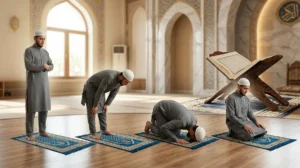
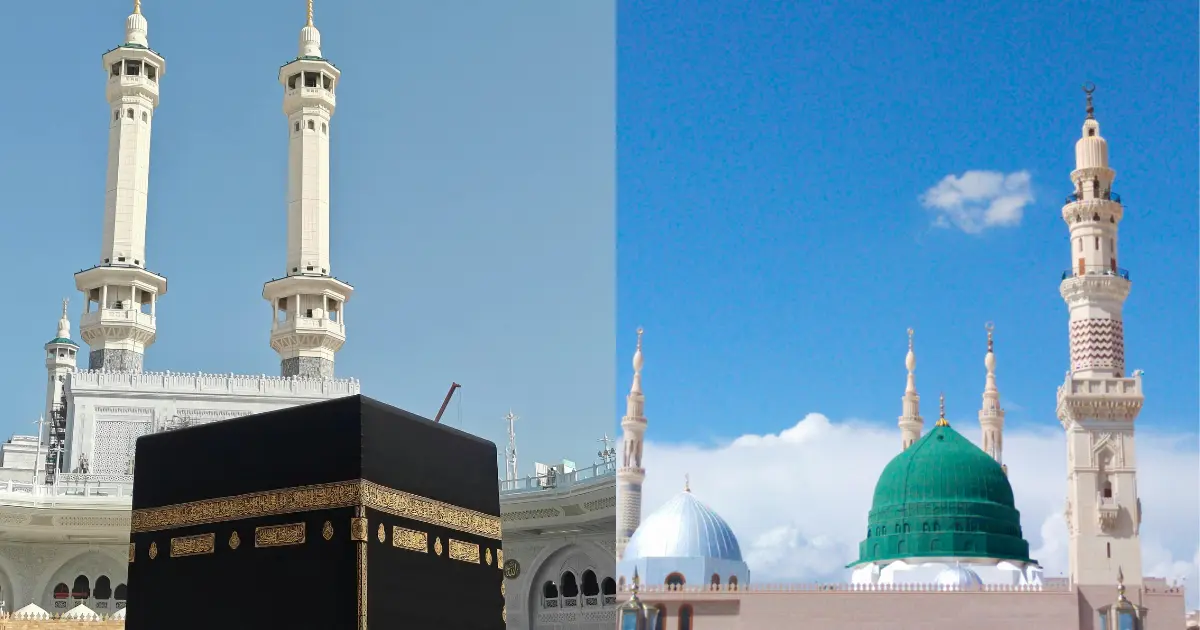
At the heart of Makkah stands the Kaaba, a cubic stone structure draped in black cloth embroidered with Quranic verses in gold. Muslims do not worship the Kaaba, but they face toward it, the Qiblah, during every one of their five daily prayers. For those looking to perfect their pronunciation and flow while reciting these sacred verses, joining a professional Quran recitation course online USA platform is a wonderful way to improve. This single act of orientation unifies over a billion people across every time zone in a single direction simultaneously.
The Kaaba is believed to have been originally built by Prophet Ibrahim (Abraham) and his son Ismail (Ishmael) as the first house dedicated to the worship of one God:
“And when Ibrahim raised the foundations of the House with Ismail, [both prayed]: ‘Our Lord, accept this from us. You are the All-Hearing, the All-Knowing.'” (Quran 2:127)
This connection to Ibrahim gives Makkah a sacred lineage that predates Islam by millennia, placing it at the center of the broader Abrahamic tradition. Today, female students wishing to study this profound history in a comfortable environment can benefit greatly from dedicated Online Quran Classes For Sisters USA programs. Similarly, residents in the Midwestern region can connect with qualified teachers through tailored Online Quran Classes Indiana options to deepen their understanding right from home.
Masjid al-Haram: The Grand Mosque
Surrounding the Kaaba is Masjid al-Haram, the largest mosque in the world and the holiest site in Islam. A single prayer performed here is considered equivalent to 100,000 prayers performed elsewhere—a tradition narrated in authentic hadith that reflects the city’s incomparable spiritual weight.
The mosque also contains:
- The Black Stone (Al-Hajar Al-Aswad) — A stone believed to have descended from Paradise, embedded in the eastern corner of the Kaaba, which pilgrims kiss or gesture toward during Tawaf
- Zamzam Well—A spring that has flowed continuously for thousands of years, its water considered blessed and consumed by pilgrims and Muslims worldwide
- Maqam Ibrahim — The stone on which Prophet Ibrahim stood while building the Kaaba, bearing the impression of his feet
- The hills of Safa and Marwa—Where Hajar (Hagar), mother of Prophet Ismail, ran seven times searching for water, a ritual re-enacted by every Hajj and Umrah pilgrim
Hajj: The Pilgrimage That Defines Makkah’s Global Role
One of the most vivid expressions of Makkah’s significance is Hajj—the annual pilgrimage that every Muslim who is physically and financially able must perform at least once in a lifetime. It takes place in the Islamic month of Dhul Hijjah and draws millions of pilgrims from every corner of the globe.
Hajj is not tourism. It is a total immersion in worship, history, and collective identity. Pilgrims wear simple white garments (ihram) that erase distinctions of wealth and nationality. They circle the Kaaba, walk between Safa and Marwa, stand on the plain of Arafat in supplication, and symbolically stone the devil at Mina—each ritual connected to a Prophetic or Abrahamic event.
The gathering at Arafat on the 9th of Dhul Hijjah is considered the spiritual apex of Hajj. The Prophet ﷺ described it as “Hajj is Arafat.” Missing Arafat means missing Hajj entirely. On humbled, plain, humbled pilgrims stand in a powerful echo of the Day of Judgment—humbled, equal, seeking forgiveness.
For Muslims learning about Islam through an Islamic education program online, Hajj is typically one of the first topics explored in depth — both as a pillar of faith and as a window into Islamic history and spirituality.
Madinah: The City of the Prophet ﷺ
If Makkah is the spiritual heart of Islam, Madinah is its emotional soul. Located approximately 450 kilometers north of Makkah, Madinah—formally known as Al-Madinah Al-Munawwarah (the Radiant City)—is the city where Prophet Muhammad ﷺ migrated in 622 CE, built the first Muslim community, and where he passed away and is buried.
Madinah was not always called Madinah. Before the Prophet’s arrival, it was called Yathrib. The city was renamed Madinah—meaning “the city”—after becoming the seat of Islamic governance and community life. The name itself carries a weight of history: this is where the Muslim Ummah truly began.
Masjid al-Nabawi: The Prophet’s Mosque
Built by the Prophet ﷺ himself upon his arrival in Madinah, Masjid al-Nabawi is the second holiest mosque in Islam. A prayer here carries a reward of 1,000 prayers performed elsewhere—a distinction mentioned in authentic hadith. At its center sits the Rawdah—a garden described by the Prophet as one of the gardens of Paradise:
“Between my house and my pulpit lies a garden from the gardens of Paradise.” (Sahih Bukhari)
Pilgrims and visitors travel specifically to pray in this space, often waiting hours for the opportunity to stand in the Rawdah and supplicate.
The Prophet’s ﷺ tomb lies within the mosque, beneath the iconic green dome that has become one of the most recognized symbols in the Islamic world. Visiting the Prophet’s grave and offering salawat (blessings upon him) is one of the most emotionally significant acts a Muslim can perform.
The First Mosque: Masjid Quba
Before settling in the main city, the Prophet ﷺ stopped at the outskirts and built Masjid Quba—the very first mosque in Islamic history. The Quran refers to it as a mosque founded on taqwa (God-consciousness) from its first day (Quran 9:108). Praying two units of prayer here is narrated to carry the reward of an Umrah (minor pilgrimage).
Makkah vs. Madinah: Understanding the Distinction
Many beginners confuse the roles of these two cities or treat them as interchangeable. They are deeply connected but serve distinct spiritual functions:
| Feature | Makkah | Madinah |
| Rank in Sanctity | First—Holiest city in Islam | Second—The second holiest city in Islam |
| Primary Significance | Birthplace of Islam, site of Hajj | City of the Prophet, seat of early Islamic community |
| Central Mosque | Masjid al-Haram | Masjid al-Nabawi |
| Prayer Reward | 100,000 prayers (compared to elsewhere) | 1,000 prayers (compared to elsewhere) |
| Non-Muslim Access | Strictly prohibited | Generally permitted (except mosque inner areas) |
| Core Ritual | Hajj and Umrah | Visiting the Prophet’s tomb, praying at Rawdah |
| Quranic Reference | Called Umm al-Qura (Mother of Cities) | Called Al-Madinah Al-Munawwarah (The Radiant City) |
| Key Historical Event | First revelation of the Quran | Hijra (Migration) and the Formation of the Muslim state |
Understanding this distinction matters deeply for anyone pursuing a serious Islamic education program online or enrolling in online Quran classes for beginner adults in the USA—these cities provide the geographic and historical backbone of the entire Quranic narrative.
The Spiritual Geography of Islam: Why These Two Cities Matter So Much
Direction of Prayer (Qiblah)
Every Muslim on earth—whether in online Quran classes in New York or online Quran classes in California, whether in a mosque in Dearborn, Michigan, or a living room in Texas—faces the direction of the Kaaba in Makkah during prayer. This single act creates a global circle of orientation, making Makkah the literal center point of the Muslim world five times a day, every day.
The Quran Was Revealed Here
The Quran, the central text of Islam, was not revealed in a vacuum. Its verses descended over 23 years, in Makkah and Madinah, in direct response to the events and questions of the Prophet’s community. Islamic scholarship even categorizes Quranic chapters (Surahs) as either Makki (revealed in Makkah) or Madani (revealed in Madinah)—each category carrying different themes, styles, and legal implications.
Students who learn ten qirat online or enroll in a Quran recitation course online in the USA are taught to recognize these distinctions as foundational to proper Quranic understanding.
The Hadith Were Preserved Here
The sayings and actions of the Prophet ﷺ—preserved as Hadith—form the second source of Islamic law after the Quran. These were transmitted first through the companions who lived in Makkah and Madinah, then spread outward to the world. The chain of narration (isnad) in Islamic scholarship traces every authenticated hadith back, ultimately, to these two cities.
This is why an online ijazah program — a traditional certification of Quranic transmission — connects students to an unbroken chain of teachers reaching back to the companions in Makkah and Madinah themselves.
The Sacred Months and the Calendar Connection
Four months of the Islamic calendar are considered sacred (Al-Ashhur Al-Hurum): Dhul Qa’dah, Dhul Hijjah, Muharram, and Rajab. b. Three of these surround the Hajj season, when pilgrims converge on Makkah. The rhythm of the Islamic year is essentially structured around Makkah—the city’s sacred calendar becomes the world’s sacred calendar for Muslims everywhere.
Umrah: The Minor Pilgrimage
Unlike Hajj, which is obligatory once in a lifetime and restricted to specific dates, Umrah is a voluntary pilgrimage that can be performed at any time of year. It involves:
- Entering the state of ihram at designated boundary points (miqat)
- Performing Tawaf — seven circuits around the Kaaba
- Walking between Safa and Marwa seven times (Sa’i)
- Shaving or cutting the hair as a ritual conclusion
Millions of Muslims perform Umrah annually, making it one of the largest religious gatherings in human history even outside the Hajj season. For many Muslims in America—from online Quran classes in Houston, Texas, to online Quran classes in New Jersey—Umrah is often a life goal that motivates years of Islamic learning and spiritual preparation.
How Makkah and Madinah Shape Muslim Identity Globally
The two cities are not merely sites of pilgrimage. They function as identity anchors for Muslims across every culture, language, and nationality. A Chinese Muslim, a Nigerian Muslim, a Pakistani Muslim, and an American Muslim may share no language, no cuisine, and no cultural custom—but they all know the Kaaba, they all know the green dome of Madinah, and they all carry the same longing to stand in those places at least once.
This shared orientation is one of Islam’s most remarkable sociological features. It is why communities from online Quran classes in Chicago to online Quran classes in Los Angeles, and from online Quran classes in Dallas, Texas, to online Quran classes in Virginia, all study the same Quran, face the same direction in prayer, and teach their children the same duas learned by the companions in Makkah and Madinah fourteen centuries ago.
For online Quran classes for new Muslims, one of the first and most impactful lessons involves explaining the role of these two cities—because it instantly gives a new Muslim a sense of belonging to something vast, ancient, and profoundly meaningful.
Teaching Children About the Sacred Cities
Parents who want to instill love for Makkah and Madinah from an early age have more tools available than ever. Online Quran classes for toddlers in the USA and online Quran classes for teens in the USA often incorporate stories of the Kaaba, the Hijra, and the Prophet’s mosque in age-appropriate, engaging formats.
Young Muslims in communities like online Quran classes Dearborn, Michigan; online Quran classes in Illinois; or online Quran classes in Georgia, who grow up with a clear understanding of why these cities matter, tend to develop a stronger, more grounded Islamic identity—one that doesn’t need to be rediscovered or rebuilt in adulthood.
Family-based learning programs, including online Quran classes (Family Plan USA), make it practical for entire households to engage with this history together, creating shared reference points across generations.
Practical Tips for Muslims Who Want to Deepen Their Connection to These Cities
You don’t need to be in Saudi Arabia to build a meaningful relationship with Makkah and Madinah. Here’s how Muslims anywhere can deepen that connection:
- Study the Seerah (biography of the Prophet)—Understanding what happened in these cities gives the geography meaning
- Learn Quranic Arabic—Knowing the language of the Quran connects you to the text as it was revealed in these cities; a native arabic quran teacher online in the USA can accelerate this dramatically
- Improve your Quranic recitation—Enrolling in a quran reading fluency course online builds the skill to recite the same words revealed in Makkah and Madinah with proper tajweed
- Understand the rituals of Hajj and Umrah—Even before going, studying the manasik (rituals) deepens spiritual readiness
- Follow a structured Islamic studies program—Platforms offering online quran classes with certificates in the USA or online quran classes 24 7 USA allow you to build knowledge systematically regardless of your schedule
- Engage your family—Use online quran classes via zoom & skype formats for flexible, interactive family learning that keeps everyone connected to their deen
- Explore non-Arabic resources—If language is a barrier, online quran classes for non Arabic speakers and online quran classes for sisters USA in English offer accessible pathways into the material
For those in specific locations, structured local learning communities are often available through platforms serving online Quran classes. Maryland, online Quran classes Pennsylvania, online Quran classes Ohio, online Quran classes Michigan, online Quran classes in Washington state, online Quran classes in Arizona, online Quran classes in Colorado, online Quran classes in Minnesota, online Quran classes in Indiana, and online Quran classes in North Carolina.
FAQ: Significance of Makkah and Madinah for Muslims
Q: Why is Makkah the holiest city in Islam?
Makkah is the holiest city in Islam because it contains the Kaaba — the first house built for the worship of Allah — and is the site of the first revelation of the Quran to Prophet Muhammad ﷺ. It is also the destination of Hajj, one of the Five Pillars of Islam, drawing millions of pilgrims annually.
Q: Why is Madinah called the City of the Prophet?
Madinah earned this title because Prophet Muhammad ﷺ migrated there in 622 CE, built his mosque there, governed the first Muslim community there, and passed away and was buried there. It remains the resting place of the Prophet ﷺ and the site of Masjid al-Nabawi.
Q: Can non-Muslims visit Makkah or Madinah?
Non-Muslims are strictly prohibited from entering Makkah. Madinah is more accessible, though non-Muslims are restricted from entering the inner areas of Masjid al-Nabawi. This restriction on Makkah has been in place since the time of the Prophet ﷺ and is a reflection of the city’s unique sacredness.
Q: What is the difference between Hajj and Umrah?
Hajj is the obligatory major pilgrimage performed during specific days in the Islamic month of Dhul Hijjah. Umrah is a voluntary minor pilgrimage that can be performed at any time of year. Both involve visiting Makkah, performing Tawaf around the Kaaba, and walking between Safa and Marwa, but Hajj includes additional rituals such as standing at Arafat.
Q: Why do Muslims face Makkah when they pray?
Muslims face the Kaaba in Makkah (Qiblah) during prayer because it is the first house built for the worship of Allah and serves as the symbolic and spiritual center of the Muslim world. This unified direction of prayer connects all Muslims globally in a single act of worship.
Q: How can I learn more about Makkah and Madinah from home?
Structured Islamic education is widely available online. You can explore an Islamic education program online, take online Quran classes with a free trial in the USA to test different platforms, or enroll in online Quran classes for adult beginners in the USA that include modules on Islamic history, the Prophet’s biography, and the significance of the sacred cities.
Q: What is the spiritual reward of praying in Makkah and Madinah? Authentic hadith state that a single prayer in Masjid al-Haram in Makkah equals 100,000 prayers elsewhere, while a prayer in Masjid al-Nabawi in Madinah equals 1,000 prayers elsewhere. These multiplied rewards reflect the extraordinary spiritual rank of both cities in Islamic theology.
A Living Connection Across Every Continent
Makkah and Madinah are not frozen in the 7th century. They are living, breathing centers of Islamic civilization that pulse with meaning for every Muslim alive today. The student reciting the Quran in online Quran classes in New York City, the mother attending online Quran classes in Florida, and the teenager in online Quran classes in Texas—all of them are spiritually connected to the city where the Quran descended and the community where the Prophet ﷺ taught.
That connection doesn’t require a plane ticket. It is built through knowledge, through worship, and through the deliberate act of learning what these cities meant—and still mean—to the people who love them.
Every time a Muslim says “Allahu Akbar” and turns toward Makkah, the distance between where they stand and the Kaaba collapses entirely. That is the significance of these two cities. Not just in history. Right now, five times a day, for over a billion people simultaneously.
Want to build a deeper understanding of Islamic history and the Quran? Whether you’re a new Muslim, a parent, or returning to your faith—explore flexible options including online Quran classes via Zoom & Skype, online Quran classes (family plan USA), and programs led by a native Arabic Quran teacher online USA to find the right fit for your journey.