 Skip to content




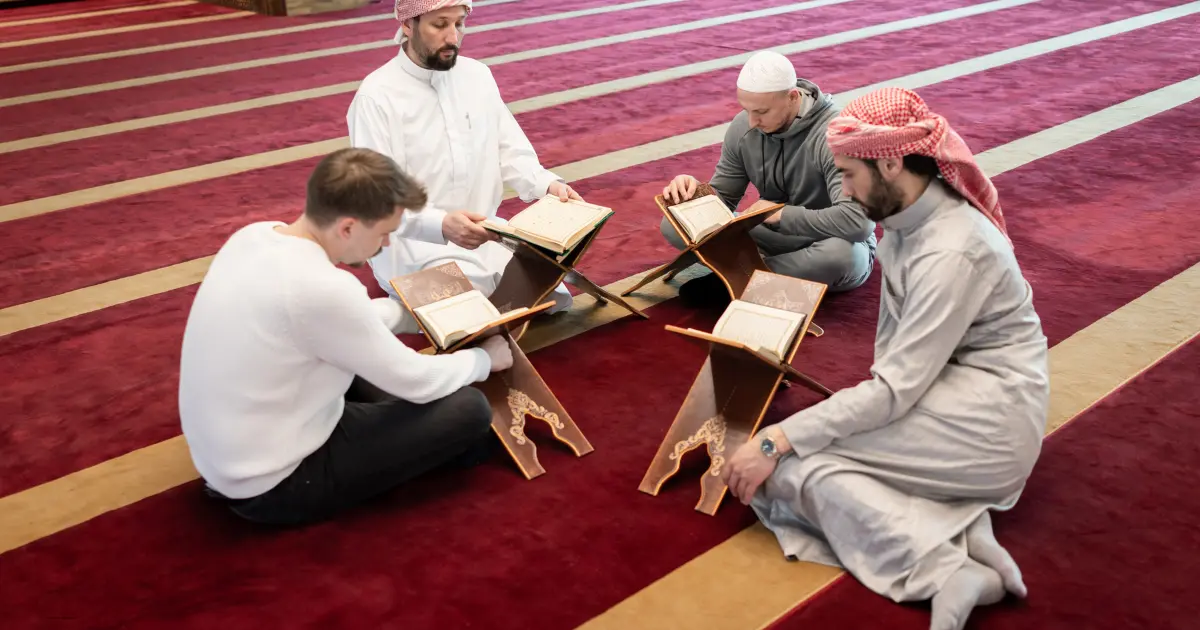
Few words in contemporary discourse are as misunderstood, misrepresented, and misused as “Shariah.” For non-Muslims, it often conjures images shaped by sensational media coverage. For practicing Muslims, however, Shariah is something deeply personal, a living, breathing framework that governs how they wake up in the morning, how they treat their neighbors, how they conduct business, and how they seek closeness to their Creator. Many believers begin this journey of closeness by building a strong bond with the holy text through structured Online Quran Classes USA. The principles of Islamic Law (Shariah) are derived from the Quran and authentic Sunnah, providing guidance for both personal and social aspects of life.
Shariah is not a rigid legal code frozen in the seventh century. It is a comprehensive ethical and spiritual system that has guided over 1.8 billion Muslims across centuries, continents, and cultures. To preserve this divine guidance in their hearts, many families encourage their children to enroll in specialized Quran Memorization (Hifz) Classes Online.
Whether you are a Muslim looking to deepen your understanding, a student of religion, or simply a curious reader, this guide will walk you through what Shariah actually is, where it comes from, how it works, and how it shapes every dimension of Muslim life. For households who want to learn these divine principles together, opting for an Online Quran Classes Family Plan USA is a highly effective approach. Furthermore, if you are located in the Lone Star State and looking for qualified tutors, joining structured Online quran classes Texas will help you seamlessly integrate these spiritual studies into your daily routine.
What Does “Shariah” Actually Mean?
The word Shariah (also spelled Sharia, Shari’ah, or Shariat) comes from the Arabic root sh-r-‘, which literally means “the path to a watering hole” or “the clear, well-trodden road.” In pre-Islamic Arabia, this term referred to the path that led to life-giving water, a metaphor that Islam adopted beautifully to describe the divine path that leads to spiritual life, moral clarity, and ultimate salvation. For students who achieve mastery in reciting and teaching this divine path, earning a certification through a premium Online Ijazah Program is the highest milestone.
In Islamic theology, Shariah refers to the complete body of divine guidance revealed by Allah (God) to the Prophet Muhammad (peace be upon him) through the Quran and the Sunnah (prophetic traditions). It encompasses everything from acts of worship to ethical behavior, family law, financial principles, and social justice. To make these comprehensive concepts accessible globally, joining structured Online quran classes for non Arabic speakers helps bridge the linguistic barrier perfectly.
“Shariah is not merely a legal system. It is a moral universe, a total way of life that integrates the spiritual and the material, the individual and the communal, the eternal and the temporal.” A common description among Islamic scholars. To experience how these beautiful scholarly principles are broken down in live sessions, you can sign up for our Online quran classes free trial USA to test our platform.
It is important to distinguish between Shariah (divine law as revealed by God) and Fiqh (Islamic jurisprudence, which is the human understanding and application of that law). This distinction is crucial: while Shariah itself is considered perfect and divine, Fiqh is a scholarly, human endeavor, and therefore open to interpretation, refinement, and scholarly debate. If you are living on the East Coast and looking for authentic guidance on these subjects, registering with Online quran classes Florida will connect you with expert scholars in your timezone.
The Primary Sources of Shariah
1. The Quran
The Quran is the literal word of Allah as revealed to Prophet Muhammad over approximately 23 years. It contains approximately 6,236 verses, of which around 500 carry direct legal implications. These cover matters of worship, family, inheritance, trade, social ethics, and criminal justice. The Quran is the supreme and unquestionable foundation of Shariah.
2. The Sunnah (Prophetic Traditions)
The Sunnah refers to the recorded sayings, actions, and silent approvals of the Prophet Muhammad (peace be upon him), compiled in collections known as Hadith. Since the Prophet was the divinely guided model of how to live according to Quran, his life serves as the practical application of Shariah. Scholars of Hadith spend lifetimes authenticating these narrations to ensure their reliability.
3. Ijma (Scholarly Consensus)
When the Quran and Sunnah do not provide explicit guidance on a matter, Muslim scholars across history have relied on the consensus of qualified Islamic jurists. This collective agreement, known as Ijma, carries significant legal authority and has been used to address new situations and emerging questions.
4. Qiyas (Analogical Reasoning)
Qiyas involves deriving rulings for new situations by drawing analogies with existing rulings from the Quran and Sunnah. For example, classical scholars used Qiyas to address the prohibition of intoxicants when new substances emerged that were not explicitly mentioned in early texts.
Some schools of Islamic law also recognize additional secondary sources, including Istihsan (juristic preference), Maslaha (public interest), and Urf (custom).
The Five Objectives of Shariah (Maqasid al-Shariah)
One of the most sophisticated concepts in Islamic legal theory is the Maqasid al-Shariah — the higher objectives or purposes that Shariah is designed to achieve. Classical scholar Imam al-Ghazali, and later Imam al-Shatibi, systematically articulated these objectives as five essential protections:
| Objective | What It Protects | Examples in Shariah |
| Hifz al-Din | Protection of Religion/Faith | Obligation of prayer, prohibition of apostasy pressure |
| Hifz al-Nafs | Protection of Life | Prohibition of murder, rules of self-defense |
| Hifz al-Aql | Protection of the Mind/Intellect | Prohibition of intoxicants and substances that harm reason |
| Hifz al-Nasl | Protection of Lineage/Family | Marriage laws, prohibition of adultery, child custody rules |
| Hifz al-Mal | Protection of Wealth/Property | Prohibition of theft, ribā (interest), and unjust contracts |
These objectives reveal something profound: Shariah is not designed to restrict human life arbitrarily. It is systematically engineered to protect what makes human life dignified, meaningful, and just.
How Shariah Guides Muslims in Daily Life
This is where the rubber meets the road. Shariah is not a theoretical concept that Muslims study in books and then set aside. It permeates every aspect of daily living.
Worship and Spiritual Practice
The most visible dimension of Shariah involves the Five Pillars of Islam — the Shahada (declaration of faith), Salah (five daily prayers), Zakat (obligatory charity), Sawm (fasting in Ramadan), and Hajj (pilgrimage to Mecca). These are not optional recommendations; they are divine obligations that Shariah mandates for every capable Muslim. The timings, methods, and conditions for each act of worship are meticulously defined through Shariah guidance.
Personal Conduct and Character
Shariah places enormous emphasis on akhlaq — moral character and ethical behavior. Being honest in speech, fulfilling promises, showing kindness to parents, maintaining family ties, treating neighbors with respect — all of these are not merely cultural values but Shariah obligations. The Prophet Muhammad (peace be upon him) said, “The most complete of the believers in faith are those with the best character.”
Dietary Laws (Halal and Haram)
Islamic dietary law is one of the most practically visible aspects of Shariah. Muslims are guided to consume only halal (permissible) food and to avoid haram (forbidden) items, including pork, blood, alcohol, and animals not slaughtered according to prescribed methods. This has given rise to an entire global halal food industry valued in the trillions.
Family and Marriage Law
Shariah provides a detailed framework for family life, including the conditions and contract of marriage (Nikah), the rights and responsibilities of spouses, guidelines on divorce (Talaq), child custody, and inheritance distribution. The Quranic system of inheritance, for example, is a mathematically precise framework that distributes wealth among surviving family members based on defined proportions.
Financial and Business Ethics
Islamic finance is one of the fastest-growing sectors of the global economy, rooted entirely in Shariah principles. The most well-known prohibition is ribā — usually translated as usury or interest — which Islam categorically forbids. In its place, Shariah-compliant finance uses partnerships, profit-sharing arrangements, and asset-backed transactions. Concepts like Murabaha, Ijara, Musharaka, and Sukuk (Islamic bonds) are all Shariah-compliant financial instruments used by banks and governments worldwide.
The Major Schools of Islamic Law (Madhabs)
Shariah is not monolithic. Over centuries of scholarly development, four major schools of Sunni jurisprudence emerged, each named after its founding scholar:
| School (Madhab) | Founder | Primary Region | Known For |
| Hanafi | Imam Abu Hanifa (d. 767 CE) | South Asia, Turkey, Central Asia | Extensive use of Qiyas; relatively flexible |
| Maliki | Imam Malik ibn Anas (d. 795 CE) | North and West Africa | Emphasis on practice of Madinah; Maslaha |
| Shafi’i | Imam al-Shafi’i (d. 820 CE) | Southeast Asia, East Africa, Egypt | Rigorous methodology; balanced approach |
| Hanbali | Imam Ahmad ibn Hanbal (d. 855 CE) | Arabian Peninsula | Strict adherence to Hadith; conservative |
In Shia Islam, the primary school of jurisprudence is the Ja’fari school, named after Imam Ja’far al-Sadiq. These schools agree on the vast majority of Islamic practice; their differences are largely in matters of detail and methodology, not in foundational belief.
Common Misconceptions About Shariah
The gap between what Shariah actually is and how it is popularly perceived in Western media is enormous. Addressing these misconceptions directly is important for anyone seeking genuine understanding.
Misconception 1: Shariah is only about harsh criminal punishments.
The reality is that Hudud punishments (fixed penalties for specific crimes mentioned in the Quran) constitute a tiny fraction of Shariah. The overwhelming bulk of Islamic law deals with worship, ethics, family life, commerce, and social relations. Moreover, classical Islamic jurisprudence surrounds Hudud punishments with such stringent evidentiary requirements that scholars throughout history have noted they are more deterrent in principle than common in practice.
Misconception 2: Shariah is incompatible with modernity.
Islamic scholars have consistently demonstrated that the Maqasid framework and tools like Ijtihad (independent legal reasoning) allow Shariah to address contemporary issues — from bioethics and digital finance to environmental responsibility — in principled ways. The tradition is living and adaptive.
Misconception 3: Shariah oppresses women.
This claim ignores the historical context in which Shariah was revealed — a 7th-century Arabia where women had virtually no rights — and the rights Shariah granted women that were revolutionary for their time: the right to own property, inherit wealth, initiate divorce, and maintain their own financial identity. Ongoing debates within Muslim communities about gender equity are precisely that — ongoing debates — not settled conclusions of the tradition itself.
Misconception 4: All Muslims want Shariah imposed as state law.
Muslim opinion on the relationship between Shariah and the state varies enormously across countries and communities. Many Muslims view Shariah primarily as a personal religious obligation, not a political agenda. The relationship between Islam and governance is a rich, contested, and evolving discussion within Muslim intellectual tradition.
Shariah and the Quran: An Inseparable Bond
For Muslims learning the Quran — whether through online Quran classes, local madrasas, or self-study — understanding Shariah is inseparable from understanding the text itself. The Quran is not merely a book of theology; it contains the foundational guidance from which Shariah is derived. Verses about prayer, fasting, trade, family, and justice are not abstract poetry — they are divine instructions that Shariah translates into actionable guidance.
This is why institutions dedicated to Quranic education, including online Quran learning platforms serving Muslim communities in the United States and beyond, consistently integrate basic Shariah literacy into their curriculum. Reciting the Quran beautifully is one skill; understanding what the Quran is commanding and guiding you toward is another — and Shariah is the bridge between the two.
How Muslims Learn and Apply Shariah
For most Muslims, especially those living in non-Muslim-majority countries like the United States, UK, or Canada, the experience of Shariah is deeply personal and voluntarily embraced. Here is how that learning typically unfolds:
-
- Childhood Education: Children learn basic Islamic obligations — prayer, fasting, respectful conduct — through family and weekend Islamic schools (maktabs).
-
- Quran and Tajweed Study: Understanding the Quran in Arabic, including verses with legal implications, forms the foundation.
-
- Online Islamic Learning: Platforms offering online Quran and Islamic studies classes have made Shariah education accessible to Muslims worldwide, regardless of geography.
-
- Scholarly Guidance: Muslims regularly consult qualified scholars (Muftis and Imams) for Fatawa (religious opinions) on contemporary questions.
-
- Community Practice: Living within a Muslim community — observing Ramadan, attending Friday prayers, participating in Eid celebrations — is itself a form of embodied Shariah education.
Practical Tips for Non-Muslim Readers Engaging With Shariah
If you are approaching Shariah as an outside observer or a student of Islamic studies, here are some respectful and intellectually honest approaches:
-
- Read primary sources. Look at translations of the Quran and authenticated Hadith rather than relying solely on secondary commentary.
-
- Distinguish between Shariah and cultural practice. Not everything labeled “Islamic” in a particular culture is actually rooted in Shariah. Cultural traditions sometimes get conflated with religious law.
-
- Engage with classical and contemporary Muslim scholars. Scholars like Imam al-Nawawi, Ibn Rushd, Imam al-Ghazali, and contemporary figures offer sophisticated, nuanced treatments of Islamic law.
-
- Recognize internal Muslim diversity. There is no single, unified Muslim voice on the application of Shariah in the modern world. The tradition is rich, contested, and alive.
-
- Ask questions respectfully. Most practicing Muslims welcome genuine curiosity about their faith.
Final Thoughts: Shariah as a Living Spiritual Path
Shariah, understood properly, is not a system of oppression or a political ideology. It is a deeply compassionate, intellectually sophisticated, and spiritually rich framework that has guided Muslim civilization for fourteen centuries. At its heart is a simple conviction: that God, who created human beings, knows better than anyone else what is good for them — and that following divine guidance is the surest path to human flourishing.
For Muslims striving to live faithfully — whether in Karachi or California, Istanbul or Indiana — Shariah is not a burden imposed from outside. It is a discipline embraced from within, a path walked voluntarily, and a connection to something far greater than the individual self.
If you are on a journey to understand Islam more deeply, the best place to start is where Shariah begins: with the Quran. Learning to read, recite, and understand the Quran is the foundational step toward grasping how Shariah guides Muslim life. Whether through an online Quran class or local Islamic education, that journey of learning is itself an act of Shariah — the pursuit of knowledge, which the Prophet Muhammad called an obligation for every Muslim.
